


- AreaAbout 103 sq km · Mumbai & Thane
- Nearest stationBorivali (East) ~1 km · 10–15 min walkWestern line
- Nearest metroRashtriya Udyan near the main gateLine 7 · Red
- Best timeOctober – February · weekday mornings
- Known forKanheri CavesLeopardsTiger safariVan Rani toy train
- AddressMain gate, Western Express Highway, Borivali East, Mumbai, Maharashtra 400066
Sanjay Gandhi National Park (SGNP), also known as Borivali National Park, is a stunning natural wonderland in the heart of Mumbai, covering about 103 sq km of forest, hills and lakes. It is one of the few national parks in the world inside a big city, and it welcomes lakhs of visitors every year. This guide covers where the park is, its history, the Kanheri Caves, timings and tickets, things to do, animals, how to reach by train and metro, photos and FAQs.
- About
- Location
- History
- Kanheri Caves
- Timings & tickets
- Things to do
- Animals & plants
- How to reach
- Photos
- Nearby places
- Tips
- FAQs
About Sanjay Gandhi National Park
Sanjay Gandhi National Park is one of the most visited national parks in Asia and is full of amazing flora and fauna. For people living in Mumbai’s suburbs, it is a green lung and a weekend escape: thick forest, two lakes that supply the city’s drinking water, leopards living within sight of high-rise buildings, and the 2,000-year-old Kanheri Caves at its heart.
The area has a long and rich history. Although visitors can experience many amazing sights, the Kanheri Caves, carved into the rock around 2,000 years ago, remain the park’s top attraction.
Where is Sanjay Gandhi National Park located?
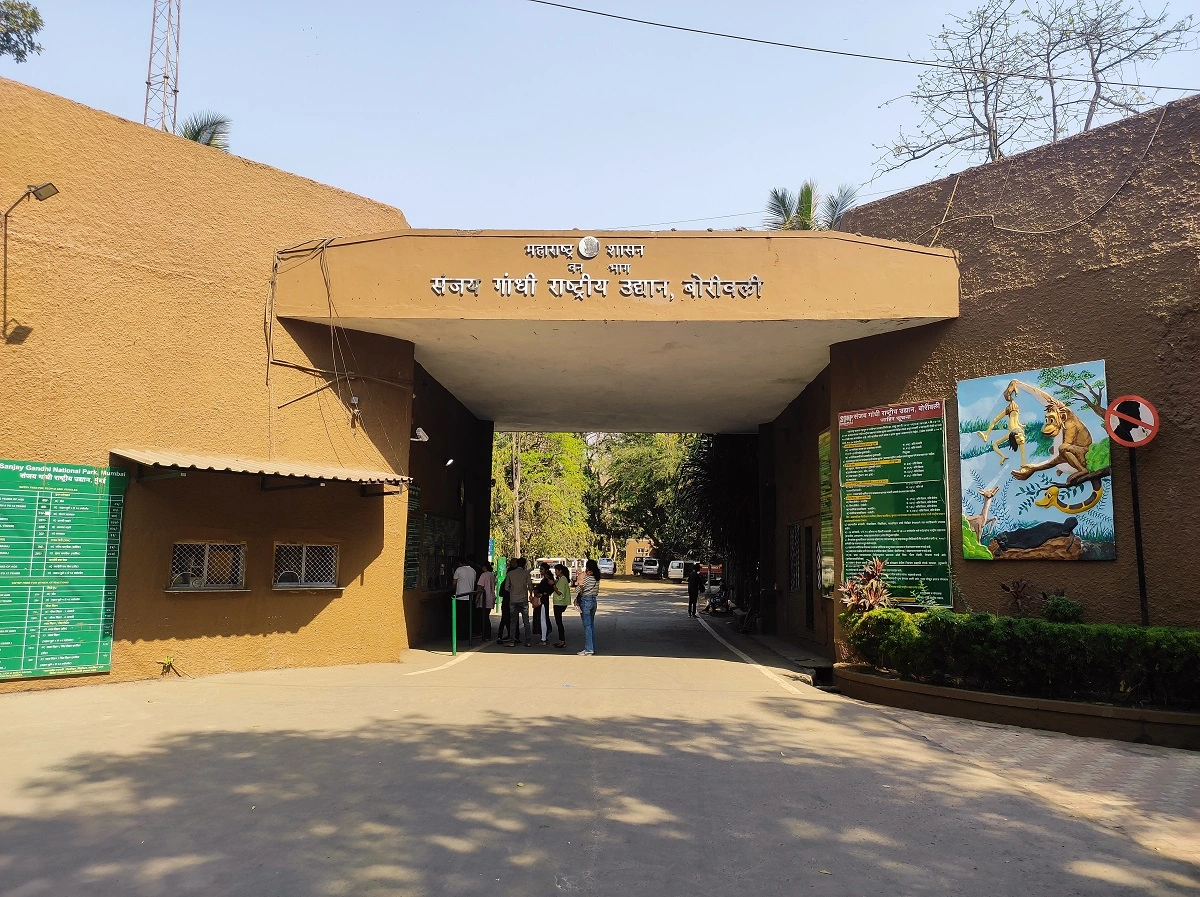
Sanjay Gandhi National Park is located in the northern suburbs of Mumbai, Maharashtra. The main entrance is in Borivali East, on the Western Express Highway, which is why it is also called Borivali National Park. The forest stretches east and north across Goregaon, Mulund and the Yeoor Hills of Thane, so part of the park lies in Thane district.
| Sanjay Gandhi National Park location | |
|---|---|
| Main gate address | Western Express Highway, Borivali East, Mumbai, Maharashtra 400066 |
| Area | About 103 sq km, in Mumbai Suburban and Thane districts |
| Other entry points | Yeoor Hills (Thane) and the Tulsi side; check permits for trails |
| Nearest railway station | Borivali (East), about 1 km |
| Nearest metro | Rashtriya Udyan, Line 7, next to the main gate |
| Official website | sgnp.maharashtra.gov.in |
History of Sanjay Gandhi National Park
The park’s history goes back more than 2,000 years. An ancient trade route connected the ports of Sopara and Kalyan, which traded with lands as far away as Greece and Mesopotamia. The Kanheri Caves, a Buddhist pilgrimage and study centre, were on this route.
- 1st c. BCEKanheri Caves begin
Buddhist monks start carving the Kanheri Caves out of basalt rock, on the old trade route between the ports of Sopara and Kalyan. Work continues for over a thousand years.
- 1856–60Vihar Lake
The British build Vihar Lake inside the forest to supply drinking water to Bombay.
- 1879Tulsi Lake
Tulsi Lake is built nearby, the second lake inside today’s park.
- 1950Krishnagiri National Park
About 20 sq km of forest is protected as Krishnagiri National Park.
- 1969 – 1976Borivali National Park
The park is renamed Borivali National Park and expanded with surrounding forests.
- 1981Sanjay Gandhi National Park
It is renamed after Sanjay Gandhi, son of Prime Minister Indira Gandhi, and grows to about 103 sq km.
- 2026Van Rani returns
The toy train, shut since Cyclone Tauktae in 2021, returns as a battery-powered train with vistadome coaches.
In 1981 the park was renamed Sanjay Gandhi National Park in memory of Sanjay Gandhi, the younger son of former Prime Minister Indira Gandhi, who died in 1980. The expansions over the years brought it to its present size of about 103 sq km.
Kanheri Caves

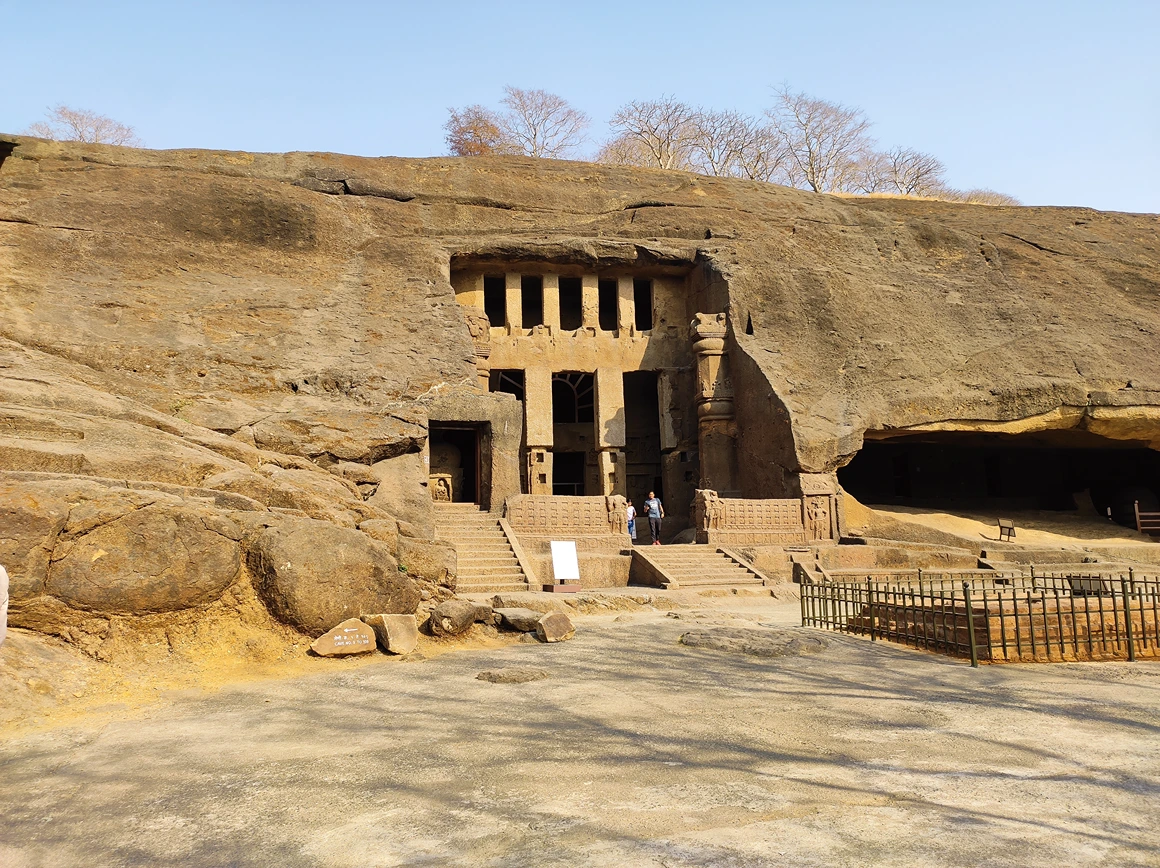
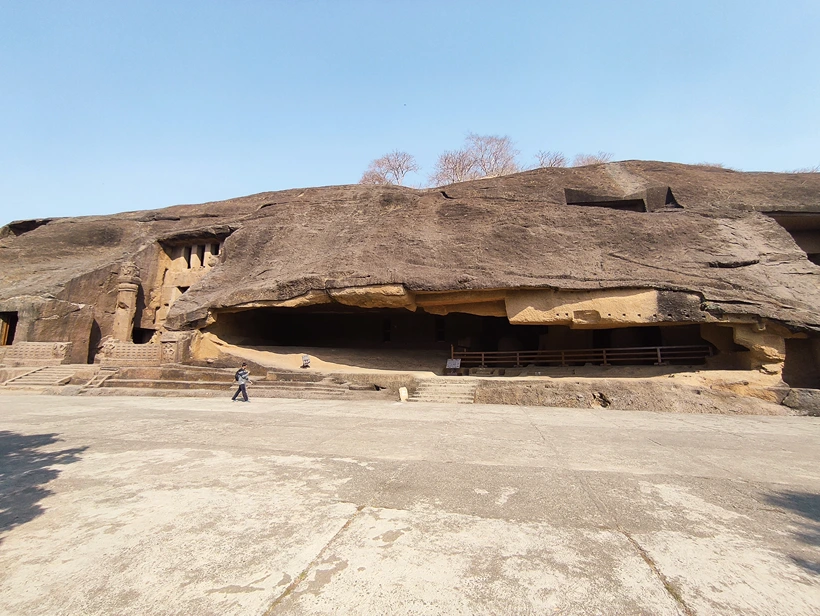
The Kanheri Caves are a group of more than 100 Buddhist caves cut into a huge basalt hill about 7 km inside the park. Buddhist monks carved them between roughly the 1st century BCE and the 10th century CE, making Kanheri one of the largest and longest-used Buddhist centres in western India. The site is protected by the Archaeological Survey of India (ASI).
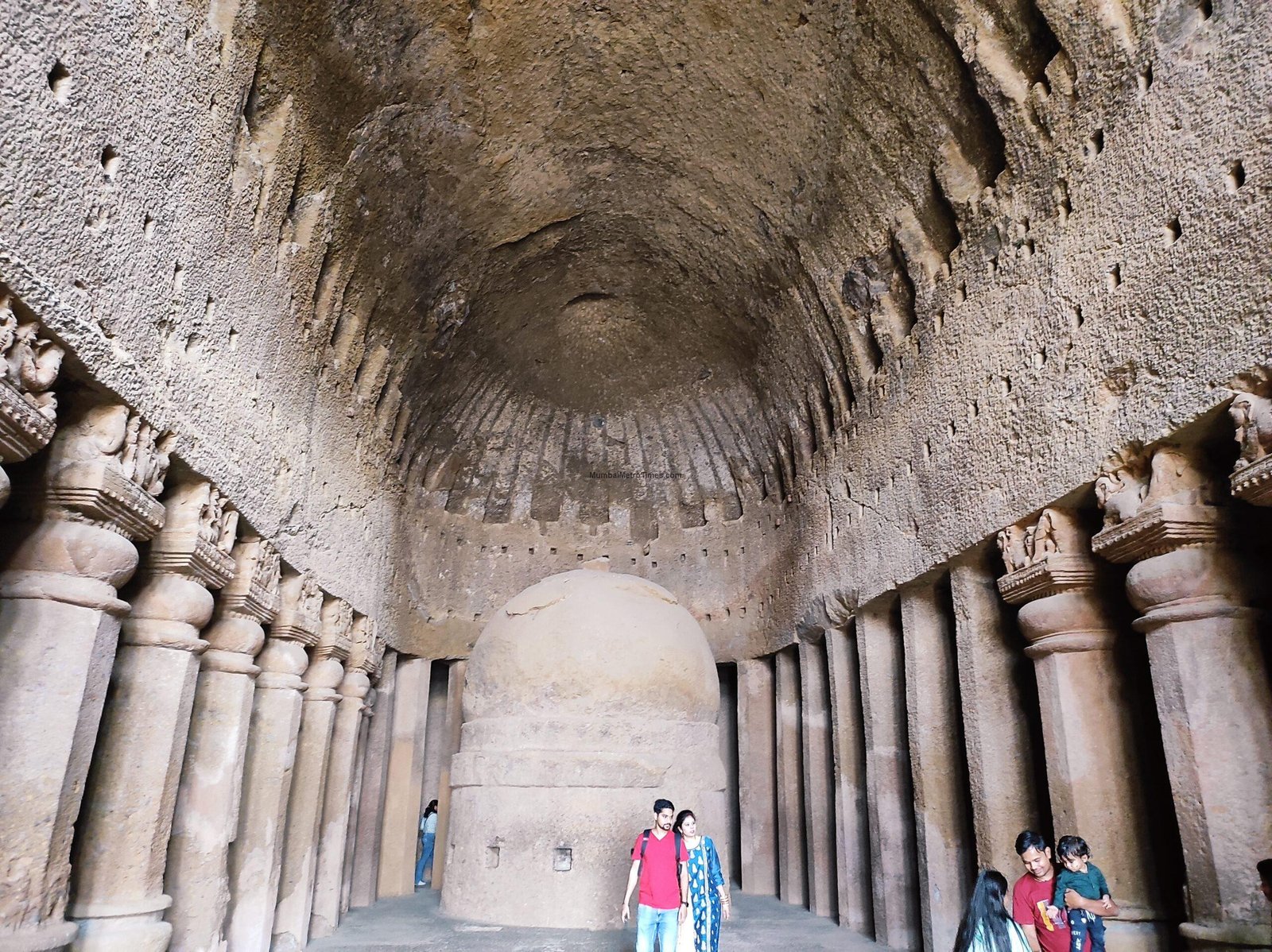
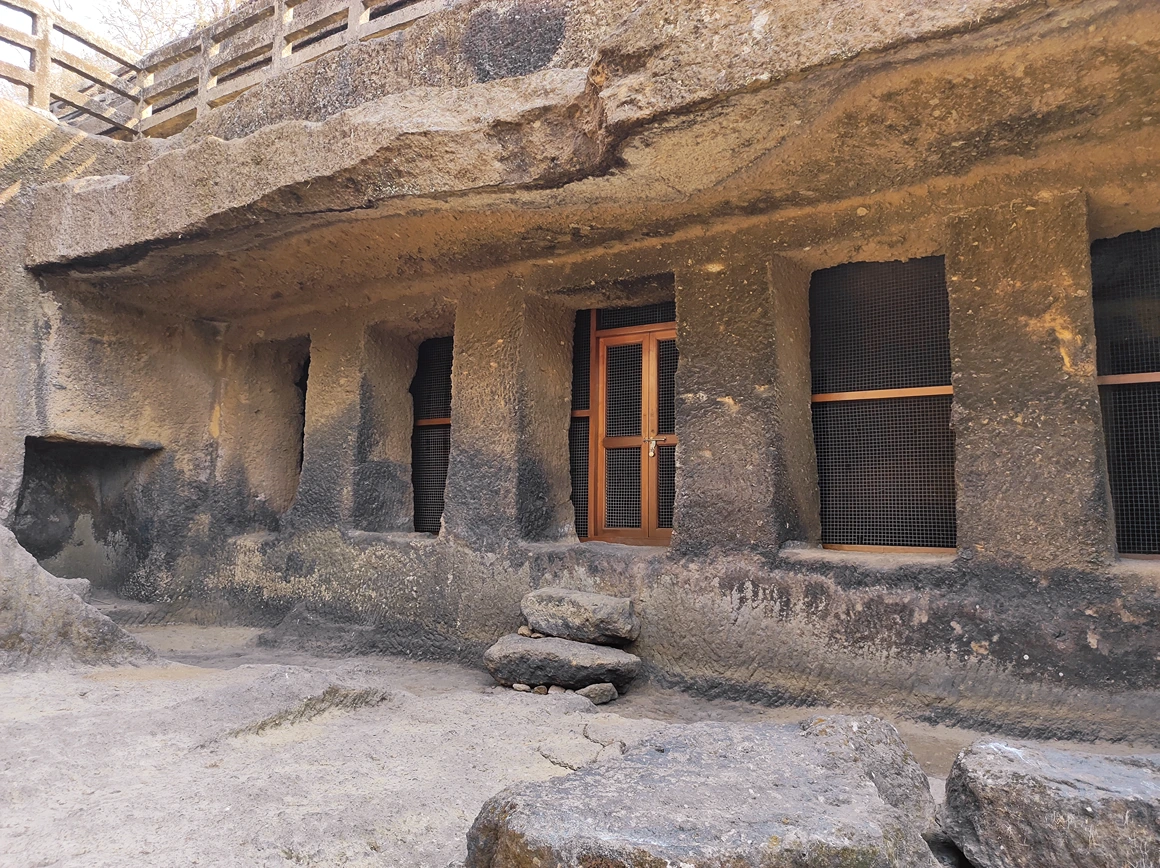
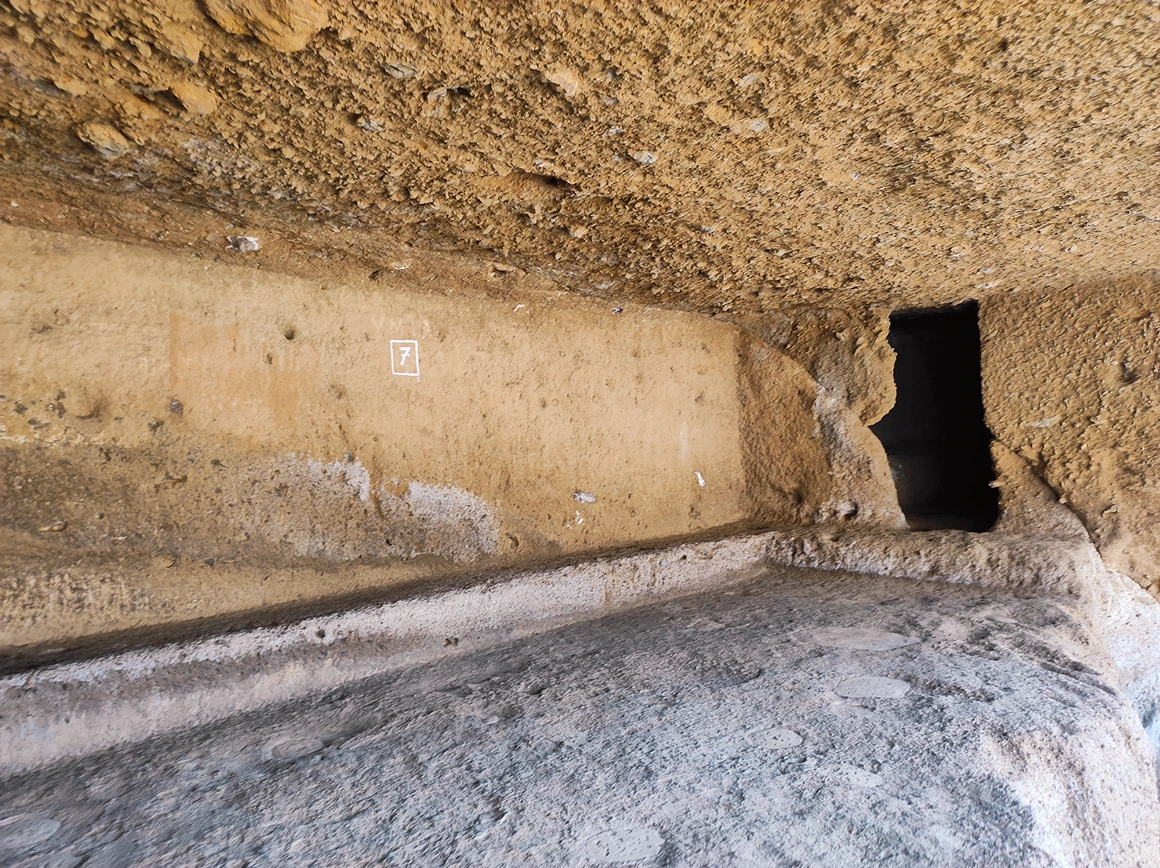
The caves feature viharas (monasteries), stupas, prayer halls and other early Buddhist architecture. Their most distinctive feature is that each cave is carved out of a single rock. The caves are simple, but expertly planned, with stone platforms for sleeping, channels to collect and store rainwater, tall pillars and walkways.
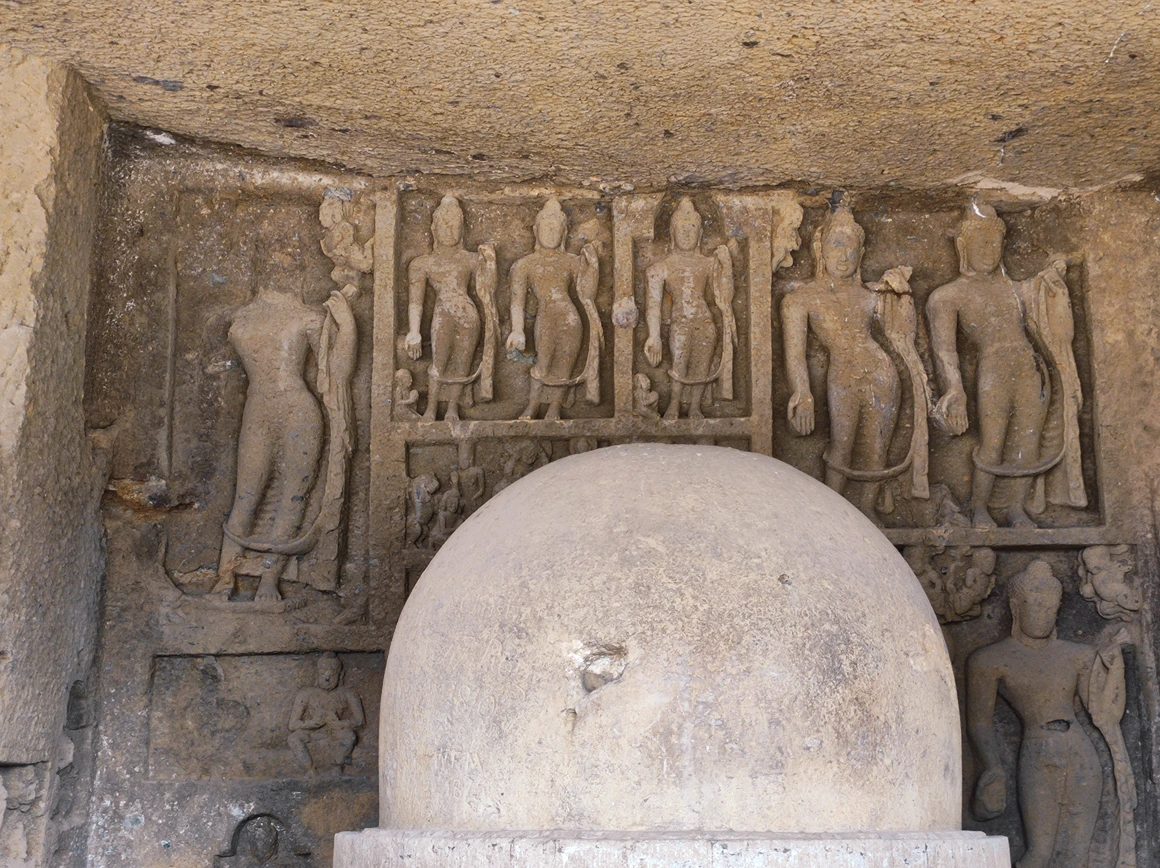
Several caves have their own special features. Cave 3, the great chaitya hall, has a large stupa, rows of tall pillars and huge standing Buddha figures at its entrance. The caves also have many Brahmi and Devanagari inscriptions that tell us about the monks and donors who lived here.
Reach the caves by park bus, cycle or on foot from the main gate, and buy the separate ASI ticket at the caves. Read more in our Kanheri Caves guide.
Sanjay Gandhi National Park timings and ticket prices
| Timings | Details |
|---|---|
| Park timings | 7:30 AM – 6:30 PM, Tuesday to Sunday |
| Closed | Every Monday |
| Morning walkers | Earlier entry with a monthly or annual pass |
| Morning walkers’ pass counter | Tuesday to Friday: 8:00 AM – 5:00 PM Saturday: 8:00 AM – 11:00 AM Sunday: closed |
| Activities (boating, toy train, safari) | About 9 AM – 5 PM, with a lunch break |
| Kanheri Caves | Daytime only; plan to leave by about 5 PM |
| Time needed | Half a day; a full day with Kanheri and the safari |

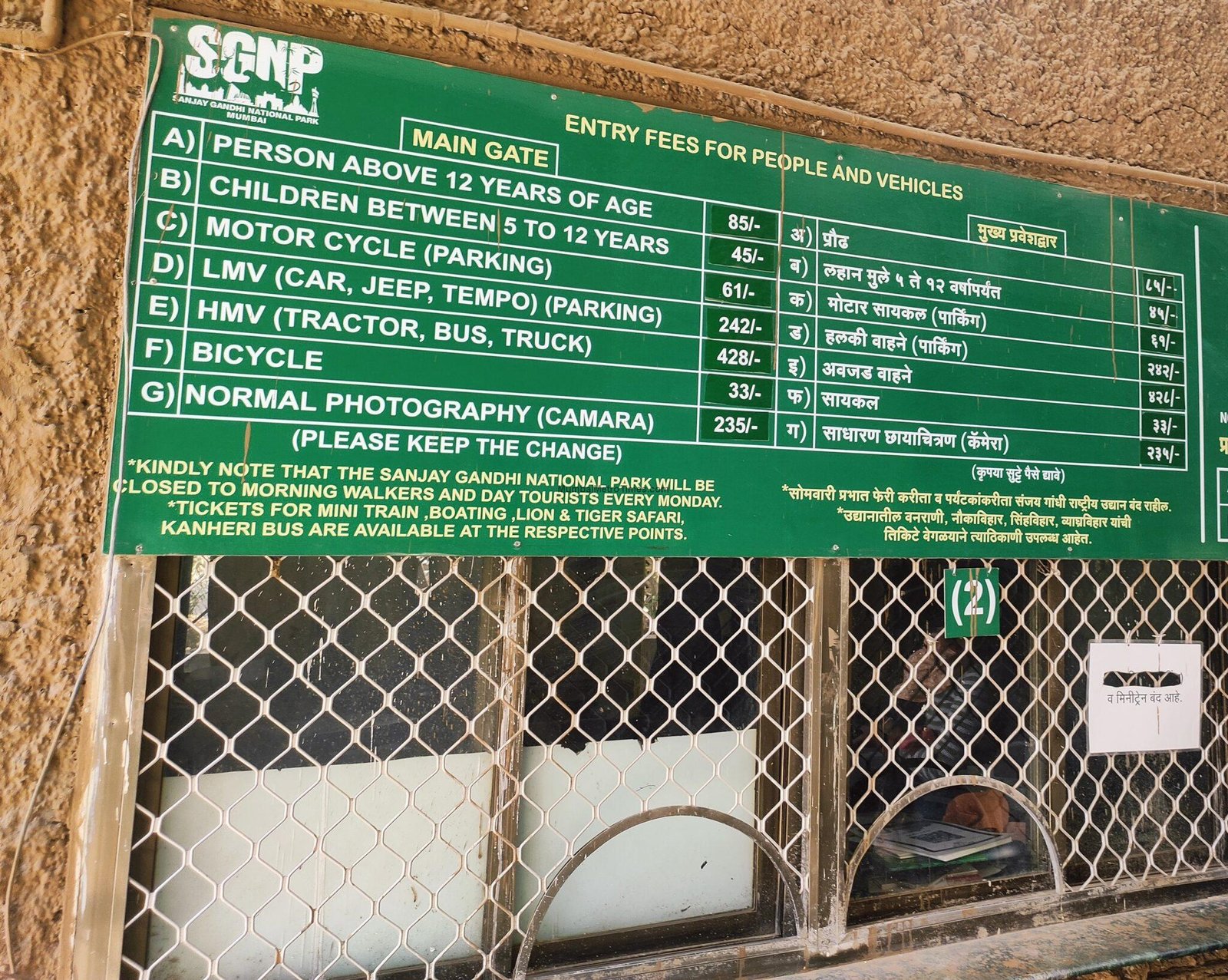
Sanjay Gandhi National Park ticket price
| Ticket / activity | Approximate charge* |
|---|---|
| Park entry – adult | ₹85 – 95 |
| Park entry – child (5–12 years) | ₹45 – 50 |
| Children under 5 | Free |
| Kanheri Caves | Separate ASI ticket at the caves |
| Bus / e-bus to Kanheri Caves | Charged per person, return |
| Tiger safari | Separate ticket; book early on weekends |
| Van Rani toy train | Separate ticket at Krishnagiri station |
| Boating (2-seater / 4-seater) | About ₹90 / ₹180 for 15 minutes |
| Cycle hire | Hourly charge plus a refundable deposit and ID |
| Two-wheeler / car | Parking or vehicle entry charge at the gate |
*Rates are revised from time to time and differ between sources, so treat these as a guide and check the latest charges at the gate or on the official SGNP website, where some tickets can also be booked online.
Things to do at Sanjay Gandhi National Park
Ride the Van Rani toy train
Van Rani, the park’s much-loved toy train, is back. Shut since Cyclone Tauktae damaged its track in 2021, it returned in 2026 as two battery-powered trains, one with open heritage-style coaches and one with glass vistadome coaches. The 2.3 km loop from Krishnagiri station passes forest, tunnels and a mini zoo, and takes about 20 minutes. Buy tickets at the counter near the station; trains run through the day with a lunch break.
Tiger and lion safari
The tiger safari reopened after a rebuild, and visitors are driven through the enclosure in a closed vehicle to see tigers up close. The lion safari has been under renovation to meet Central Zoo Authority rules, so check whether it is open on the day of your visit.
Visit the Kanheri Caves
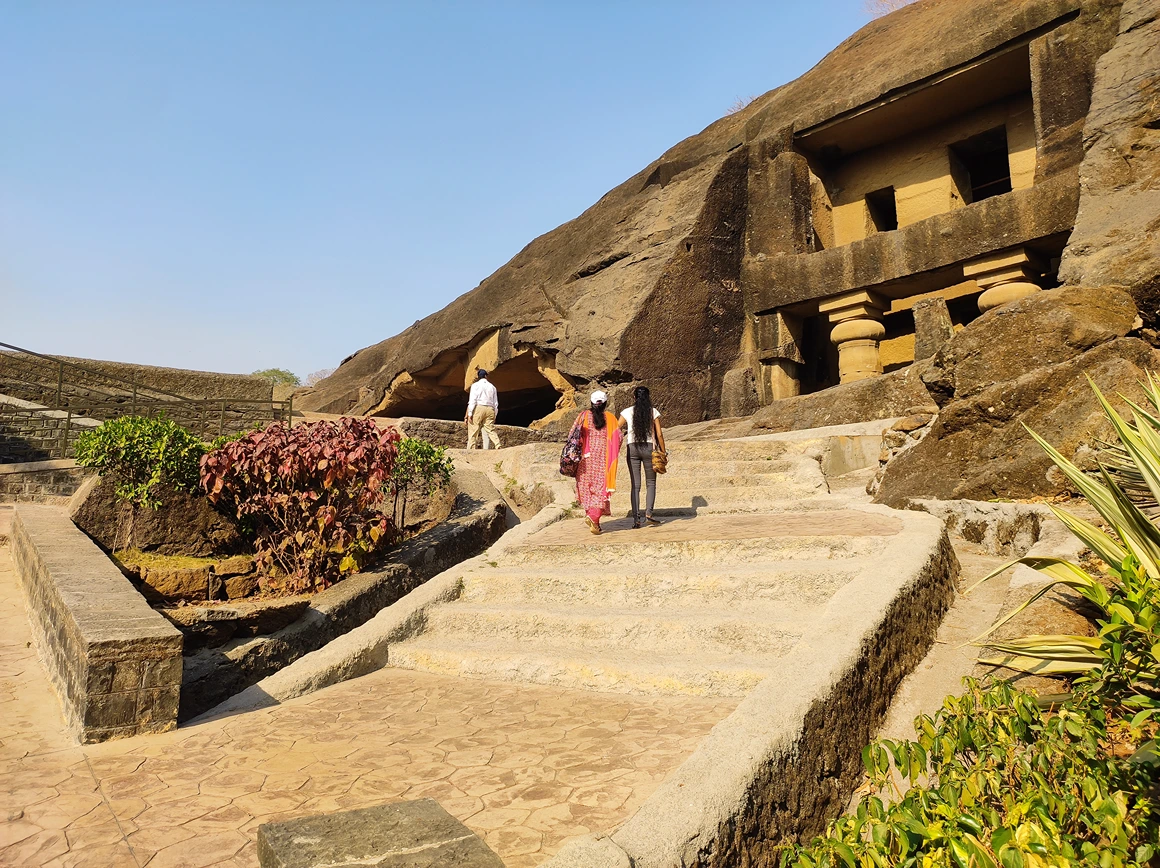
The caves are the park’s top attraction. Go in the morning, carry water and wear good shoes, as there are many steps.
Cycling

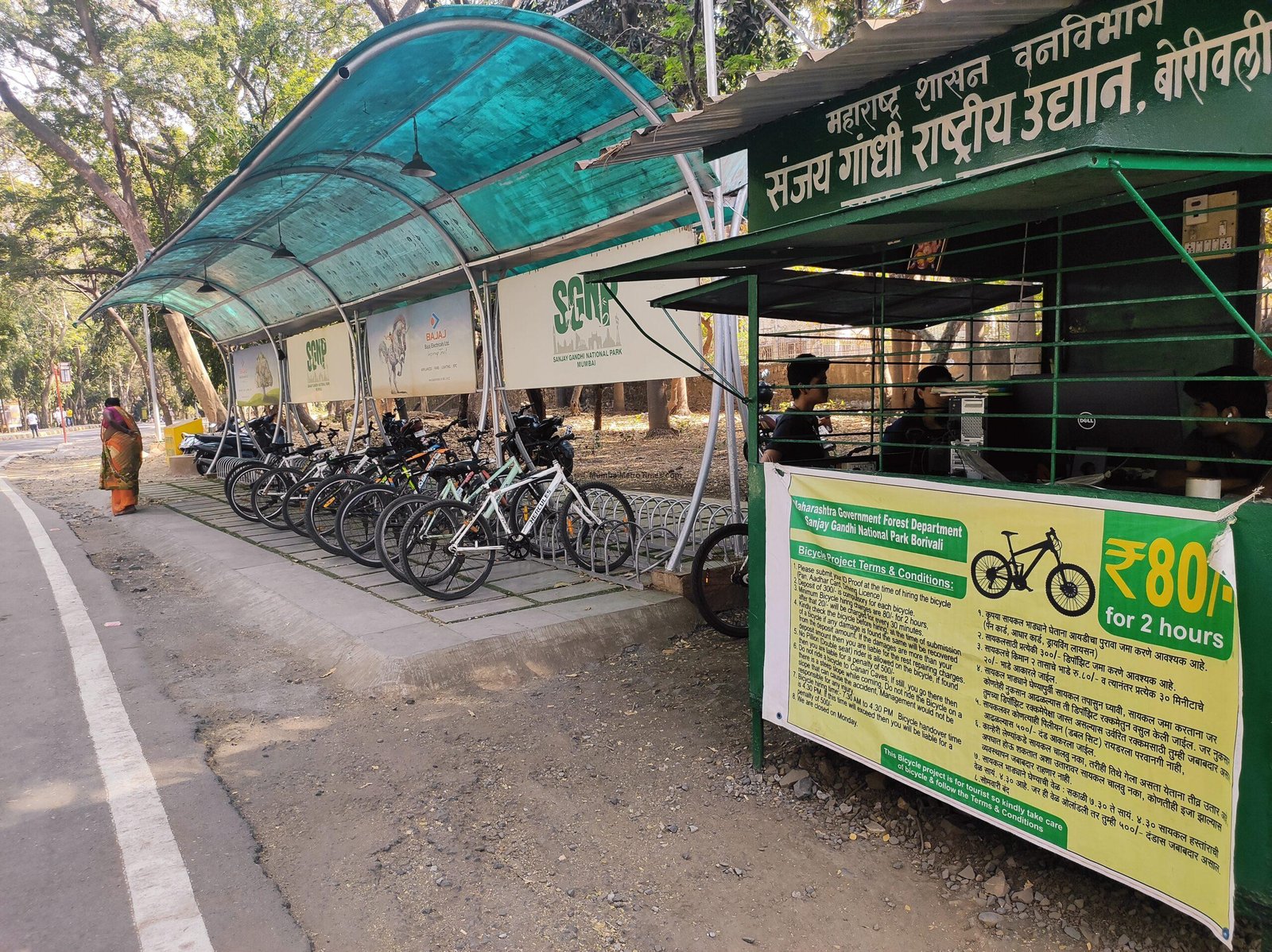
Cycling lovers can enjoy riding through a largely traffic-free forest, which is otherwise impossible on Mumbai’s busy roads. Bicycles can be rented near the main gate for an hourly charge, with a refundable deposit and an ID. There are only a limited number of cycles, so arrive early, especially at weekends.
Boating
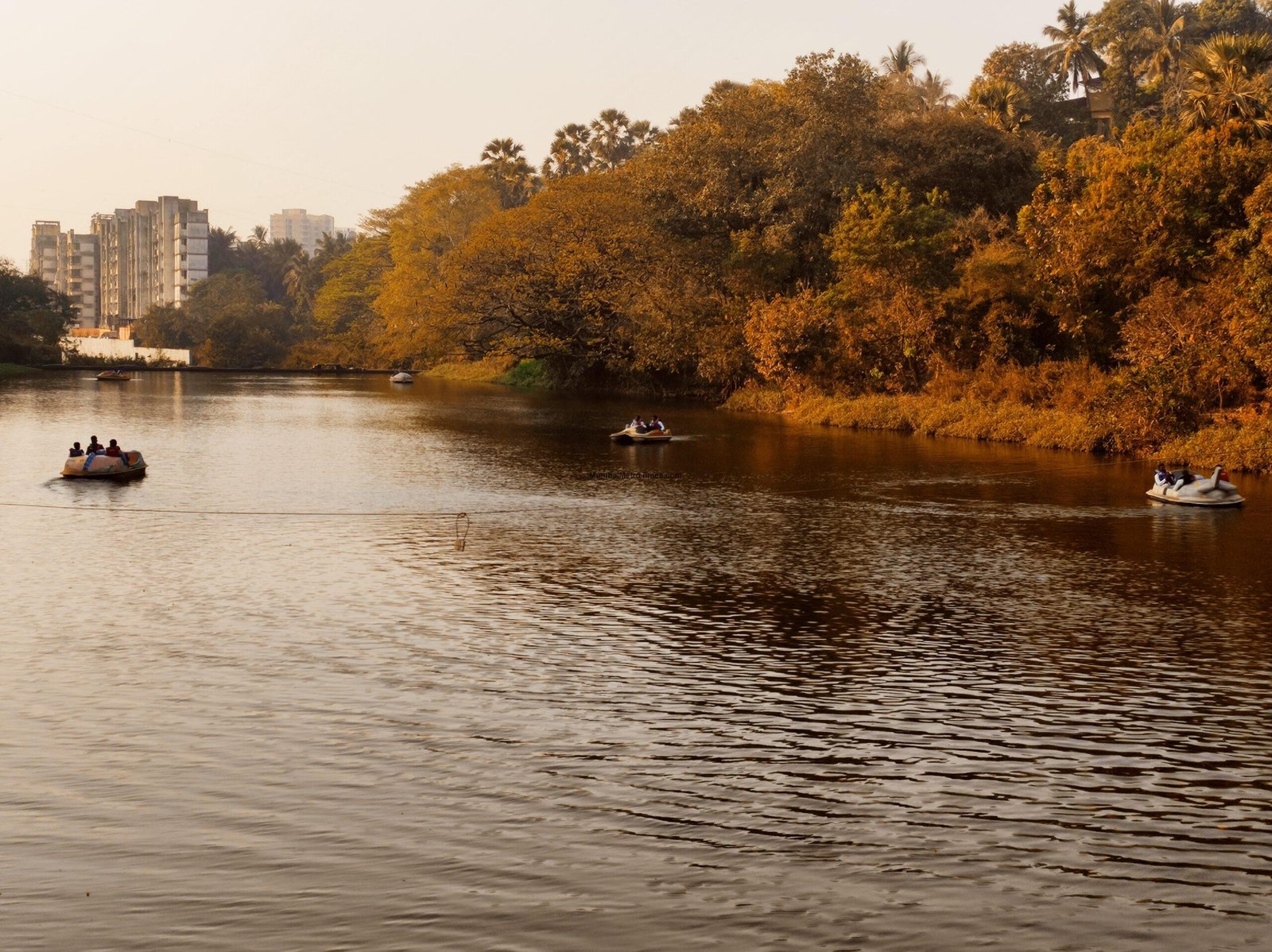
Paddle and rowing boats are available on the small lake near the main gate, in two-seater and four-seater sizes, for about 15 minutes per ride. Boating usually runs from around 9 AM to 5:30 PM, with a lunch break.
Butterfly garden and nature trails
About 170 species of butterflies have been recorded in the park, and the butterfly garden is at its best from September to January, after the monsoon. The Nature Information Centre (NIC) runs guided butterfly walks, bird walks and treks on trails such as Shilonda, Malad and Gaumukh; some trails need advance permission.
Camping and nature programmes
The NIC also organises nature camps and overnight programmes for groups and schools. Check the official website for current schedules.
Trimurti Jain temple and Gandhi Tekdi
Near the main gate are the Trimurti Digambar Jain temple, with its tall statues, and Gandhi Tekdi, a small hill memorial with views over the forest.
Animals and plants in Sanjay Gandhi National Park
The park is home to many endangered plants and animals, which is remarkable for a forest surrounded by one of the world’s biggest cities.
- Leopards – the park’s most famous residents. A 2025 camera-trap census counted about 54 leopards in the park and the neighbouring Aarey and Tungareshwar forests.
- Deer and other mammals – spotted deer (chital), sambar, barking deer, mouse deer, wild boar, langurs, bonnet macaques and the Indian flying fox.
- Birds – over 250 species, including kingfishers, hornbills, paradise flycatchers and many migratory birds in winter.
- Butterflies and insects – about 170 species of butterflies.
- Reptiles – pythons, cobras, Russell’s vipers, monitor lizards and crocodiles in the lakes.
- Plants – more than 1,300 species of flowering plants, including karvi, a shrub whose lavender flowers carpet the hills only once every seven to eight years.
The park is also home to several Adivasi hamlets (padas) whose families have lived in the forest for generations.
How to reach Sanjay Gandhi National Park
The closest railway station to Sanjay Gandhi National Park is Borivali on the Western line, and the closest metro station is Rashtriya Udyan on Metro Line 7. From either, the main gate is a short walk.
- 1Take a Western line train to Borivali (fast trains stop here)
- 2Use the east exit and walk about 1 km towards the Western Express Highway
- 3The main gate is just across the highway; autos are also available
From Churchgate the train takes about 45–60 minutes. See the Mumbai local train page.
- 1Take Metro Line 7 (Red Line) to Rashtriya Udyan station
- 2Walk to the main gate on the Western Express Highway
- 3From Andheri or Ghatkopar, change from Line 1 to Line 7 at Gundavali
Rashtriya Udyan means “national park” in Hindi and Marathi.
- 1BEST buses and app cabs stop at the main gate on the Western Express Highway
- 2Private vehicles pay a parking or entry charge at the gate
- 3Inside, use park buses, buggies or rented cycles to reach Kanheri Caves
From Thane, the Yeoor Hills side of the park is reached via Upvan Lake.
Parking at Sanjay Gandhi National Park
There is paid parking for two-wheelers and cars near the main gate, with charges displayed on a board at the entrance. Inside the park, vehicle movement is restricted on some roads, and the easiest way to get around is by park bus, buggy or cycle. Parking fills up early on weekends and holidays.
Nearest railway station to Sanjay Gandhi National Park
Distances are approximate.
Nearest metro station to Sanjay Gandhi National Park
Both on Metro Line 7 (Red Line) along the Western Express Highway.
Sanjay Gandhi National Park photos
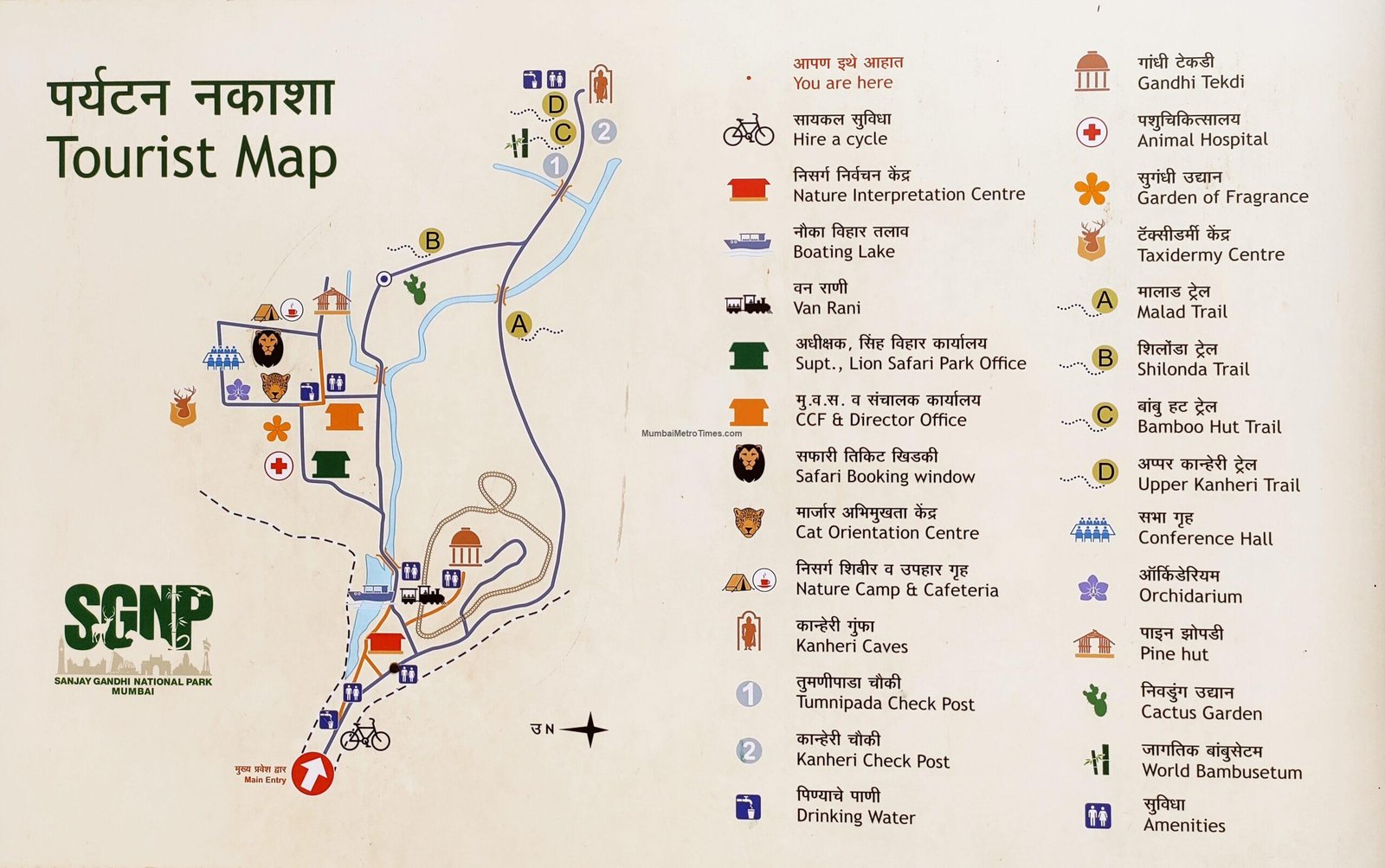
Photos taken by our team at Sanjay Gandhi National Park and the Kanheri Caves. Tap a photo to see it larger.

Places to visit inside and near the park
- Kanheri Caves – about 7 km inside the park; more than 100 Buddhist rock-cut caves.
- Vihar Lake – built by the British between 1856 and 1860 to supply drinking water to Bombay; it is fed by the Powai–Kanheri hills and is one of the sources of the Mithi river.
- Tulsi Lake – a smaller freshwater lake built in 1879, also supplying drinking water to Mumbai. It is often the first of the city’s lakes to overflow in the monsoon.
- Yeoor Hills, Thane – the Thane side of the park, popular with walkers and birdwatchers.
- Upvan Lake, Thane – a scenic lake at the foot of Yeoor Hills.
- Chhota Kashmir, Aarey – a garden and boating lake in Aarey Colony, Goregaon, a favourite film-shooting spot.
- Gorai Beach and the Global Vipassana Pagoda – about 10 km west via Borivali and the Gorai ferry.
Tips for visiting Sanjay Gandhi National Park
- Remember that the park is closed on Mondays.
- Arrive early, especially at weekends, for cycles, safari and toy train tickets.
- Carry water, snacks and comfortable shoes; the Kanheri steps are steep.
- Stay on marked roads and trails, and do not wander into the forest alone; this is leopard country.
- Do not feed monkeys or other animals, and keep food in closed bags.
- Plastic is discouraged; take your rubbish back with you.
- Leave the park and the caves well before closing time.
There is a lot more to Sanjay Gandhi National Park than one might think. Along with adventure, you can find calm in the dense forest, the sound of the wind and the call of birds. Anyone visiting Mumbai should make time for this park.
Sanjay Gandhi National Park FAQs
Where is Sanjay Gandhi National Park located?
Sanjay Gandhi National Park is in the northern suburbs of Mumbai, Maharashtra. The main gate is on the Western Express Highway in Borivali East, Mumbai 400066. The park stretches across Borivali, Goregaon, Mulund and the Yeoor Hills in Thane, covering about 103 sq km.
What are the Sanjay Gandhi National Park timings?
The park is open from 7:30 AM to 6:30 PM, Tuesday to Sunday, and closed on Mondays. Morning walkers with passes can enter earlier; the morning walkers’ pass counter is open Tuesday to Friday 8 AM – 5 PM and Saturday 8 – 11 AM. Activities such as boating, the toy train and the safari usually run from about 9 AM to 5 PM, with a lunch break.
How much is the Sanjay Gandhi National Park ticket?
The entry ticket is roughly ₹85–95 for adults and ₹45–50 for children aged 5–12; children under 5 enter free. Kanheri Caves, the tiger safari, the toy train, boating and cycle hire are charged separately. Check the official SGNP website for the latest rates.
How to reach Sanjay Gandhi National Park?
Take a Western line local train to Borivali and walk about 1 km from the east exit to the main gate, or take Metro Line 7 to Rashtriya Udyan station, right next to the gate. BEST buses and cabs also stop at the main gate on the Western Express Highway.
Is Sanjay Gandhi National Park the same as Borivali National Park?
Yes. Sanjay Gandhi National Park was earlier called Borivali National Park, and before that Krishnagiri National Park. Many people still call it Borivali National Park or simply “National Park”.
Is there a Rajiv Gandhi National Park in Mumbai?
No. Mumbai’s national park is Sanjay Gandhi National Park in Borivali. Rajiv Gandhi National Park is the official name of Nagarhole National Park in Karnataka.
Which animals can you see in Sanjay Gandhi National Park?
The park is home to leopards (about 54 were counted in the 2025 camera-trap census of the park and nearby forests), spotted deer, sambar, barking deer, langurs, macaques, wild boar and many snakes. Over 250 bird species and about 170 butterfly species have been recorded. Tigers can be seen in the tiger safari.
Is Sanjay Gandhi National Park in Thane?
Partly. The park lies in both Mumbai Suburban and Thane districts. The Yeoor Hills area near Thane is part of the park, which is why some people search for it as “Thane national park”.
How far are the Kanheri Caves from the main gate?
The Kanheri Caves are about 7 km inside the park from the main gate. You can take the park bus or e-bus, cycle, or walk; private vehicles may be restricted beyond certain points.
What is the best time to visit Sanjay Gandhi National Park?
October to February is the most pleasant time, and the monsoon (June–September) is lush and green but trails can be slippery. Visit on a weekday morning to avoid crowds; the park is closed on Mondays.
Exploring more of Mumbai? See all places to visit in Mumbai, the Mumbai Metro guide and the Metro Line 7 page.
