


- Caves109 Buddhist rock-cut caves, carved from the 1st century BCE to the 10th century CE
- LocationInside Sanjay Gandhi National Park, about 7 km from the main gate
- Nearest stationBorivali (East) ~1 km to park gate, then park busWestern line
- Nearest metroRashtriya Udyan at the park gateLine 7 · Red
- Best timeOctober – February · weekday mornings
- AddressKanheri Caves, Sanjay Gandhi National Park, Borivali East, Mumbai, Maharashtra 400066
Kanheri Caves are a group of 109 Buddhist caves cut into a basalt hill inside Sanjay Gandhi National Park in Borivali, Mumbai. Carved over more than a thousand years, from the 1st century BCE to the 10th century CE, they were home to a large community of monks and are one of the most important ancient sites in Maharashtra. This guide covers where the Kanheri Caves are, their history and architecture, timings and tickets, how to reach them from Borivali and the national park gate, photos and FAQs.
About Kanheri Caves
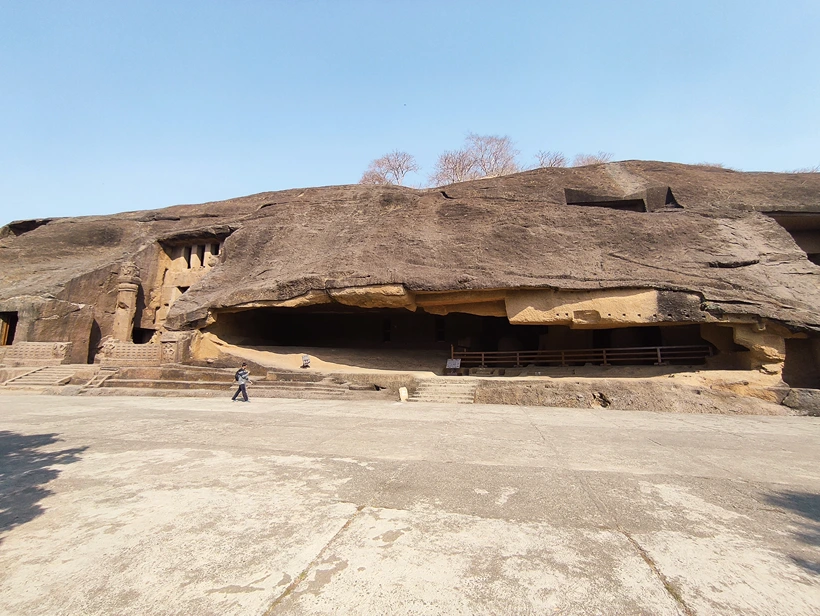
The name “Kanheri” comes from the Sanskrit “Krishnagiri”, which means “black mountain”. The caves are carved into the dark basalt of a forested hill in Sanjay Gandhi National Park, on Salsette Island, the island on which most of Mumbai stands.
The cave complex has 109 chambers cut out of the rock. Compared with the heavily decorated caves elsewhere, most are simple and practical, built for monks to live, study, meditate and teach. The large halls, used for worship, are carved with stupas, pillars and figures of the Buddha and bodhisattvas.

Where is Kanheri Caves?
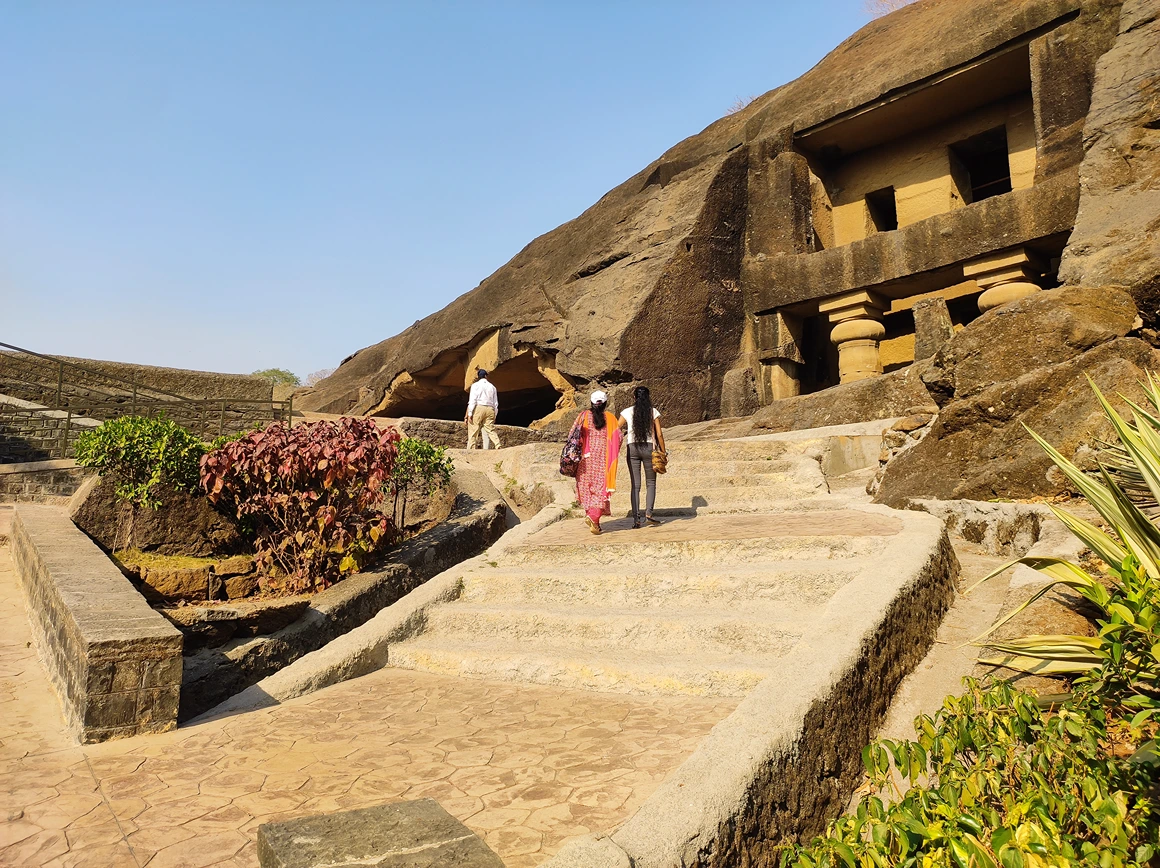
Kanheri Caves are located inside Sanjay Gandhi National Park in Borivali, in the northern suburbs of Mumbai, Maharashtra. They are about 7 km inside the park from the main gate on the Western Express Highway. This green and peaceful site is far from the noise of the city, and the caves are reached by steps carved into the rock.
| Kanheri Caves location | |
|---|---|
| Address | Kanheri Caves, Sanjay Gandhi National Park, Borivali East, Mumbai, Maharashtra 400066 |
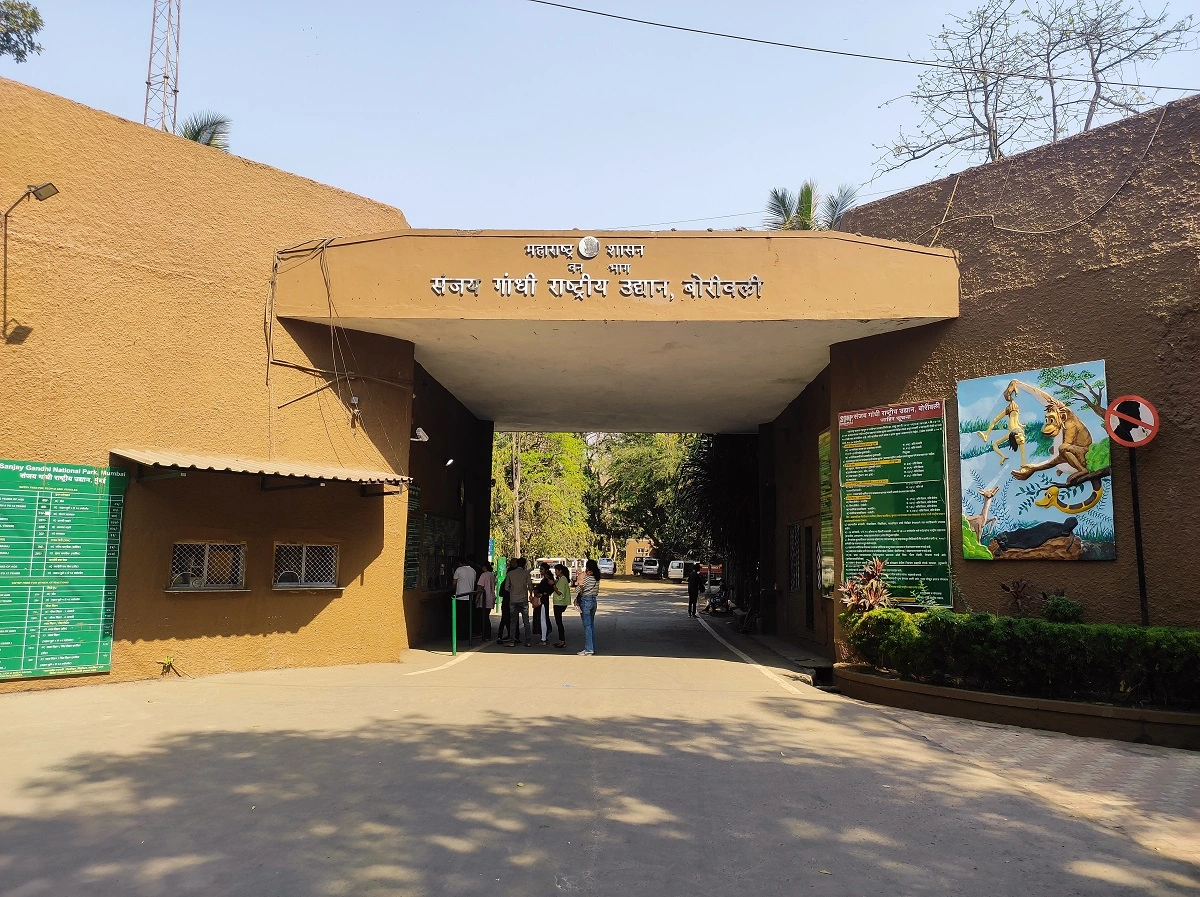
| Entry | Through the Sanjay Gandhi National Park main gate, Western Express Highway, Borivali East |
| Distance from main gate | About 7 km by park road |
| Nearest railway station | Borivali (East), about 1 km from the park gate |
| Nearest metro | Rashtriya Udyan, Line 7, at the park gate |
| Managed by | Archaeological Survey of India (caves) · Forest Department (national park) |
Kanheri Caves history
Kanheri stood on an important ancient trade network that connected ports such as Sopara and Kalyan with inland cities like Nashik, Paithan and Ujjain. Merchants and pilgrims supported the monks, and over the centuries Kanheri grew into one of the largest Buddhist monasteries on the Konkan coast and a centre of higher learning.
- 1st c. BCEMonks begin carving
Buddhist monks start cutting simple cells and halls into the basalt hill, on the trade route linking Sopara and Kalyan with the Deccan.
- 2nd c. CEThe Great Chaitya
Cave 3, the great prayer hall, is carved in the time of the Satavahana kings; an inscription links it to the reign of Yajna Sri Satakarni.
- 5th – 6th c.Mahayana images
Large Buddha and bodhisattva sculptures are added, including figures of Avalokiteshvara, as Kanheri grows into a major monastery.
- 9th – 10th c.Centre of learning
Kanheri is still an important Buddhist centre under the Silahara rulers; the teacher Atisha is said to have studied meditation here.
- 11th c. onwardDecline
As Buddhism declined in the region, the monastery was gradually abandoned.
- TodayProtected monument
The caves are protected by the Archaeological Survey of India and lie inside Sanjay Gandhi National Park.
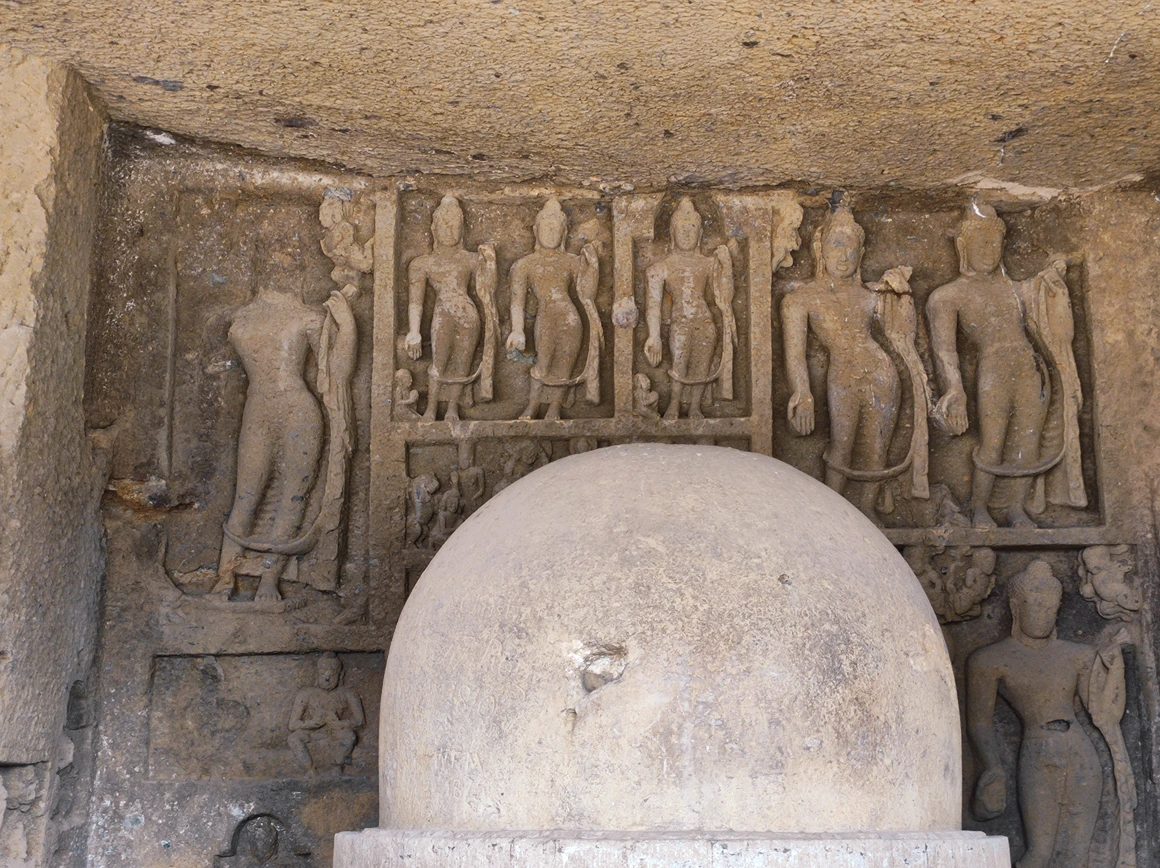
Carvings of the Buddha and bodhisattvas were added to the walls as the caves developed into a large monastery. One of the most important figures here is Avalokiteshvara, the bodhisattva who embodies the Buddha’s compassion and who is widely worshipped in Mahayana Buddhism. The caves also hold dozens of inscriptions, mostly in Brahmi and later scripts, recording the gifts of kings, merchants and monks; they give us rare clues about the world of the Buddhist monks who lived here.
Architecture of Kanheri Caves
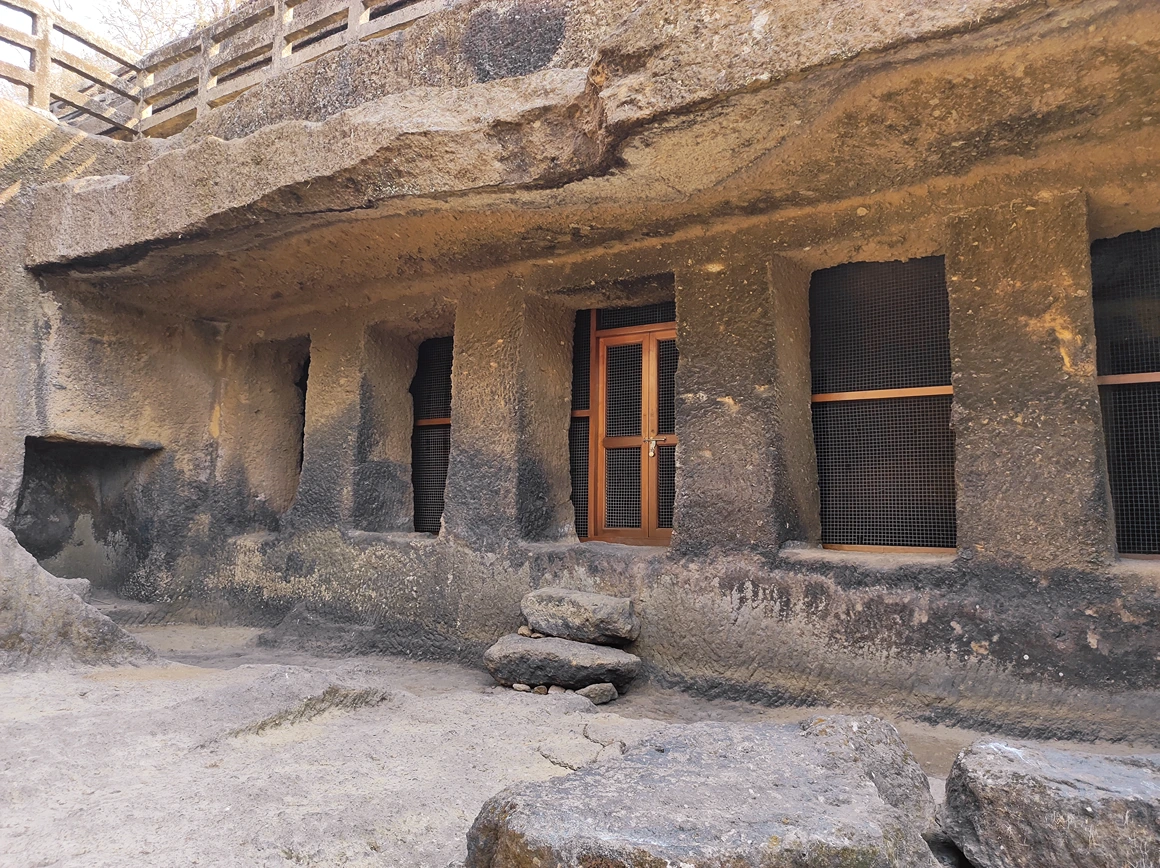
The Kanheri Caves feature viharas, stupas, prayer halls and other elements of early Buddhist architecture. Their most distinctive feature is that each one is carved out of a single mass of rock. The construction is simple but expertly planned, with stone platforms for sleeping, channels to collect and store rainwater, tall pillars and walkways linking the caves on the hillside.
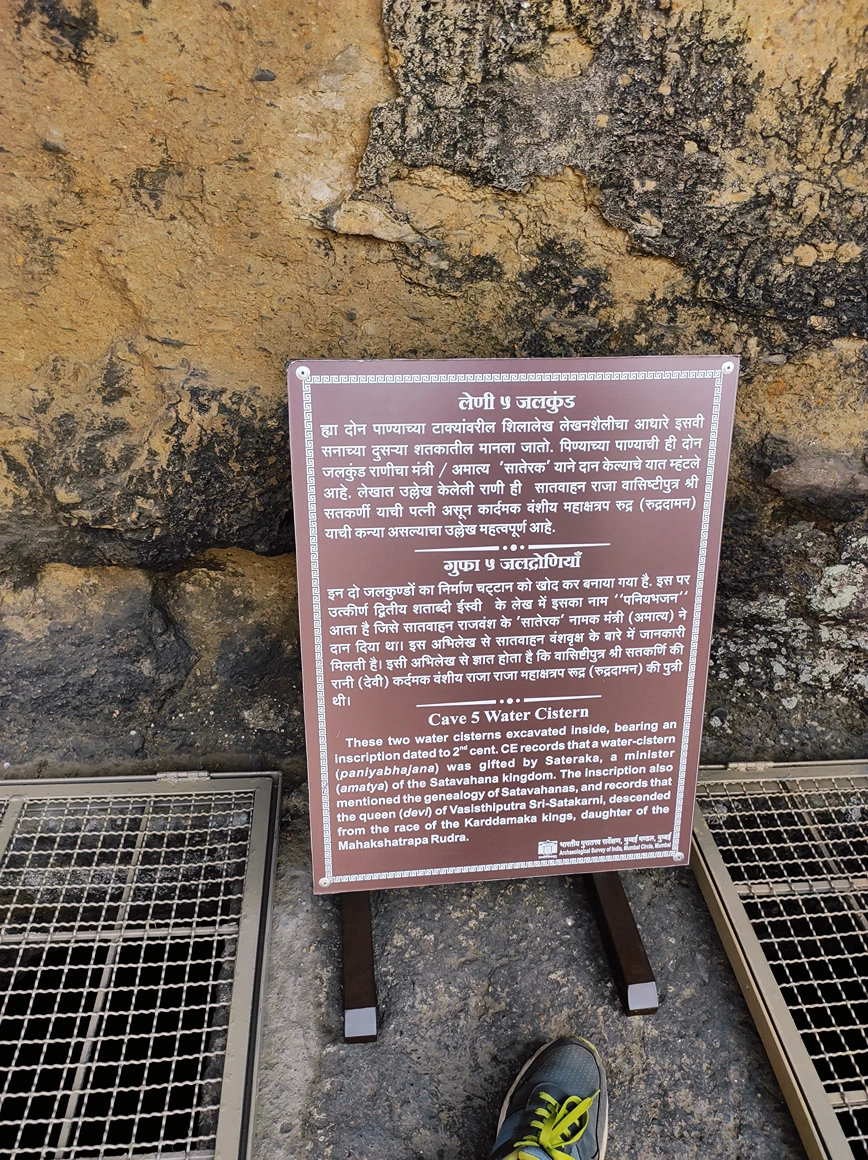
As you climb the hill, you will see the remains of old channels, cisterns and water systems that collected rainwater and led it into large tanks, so the monks had water through the dry season.
Caves not to miss
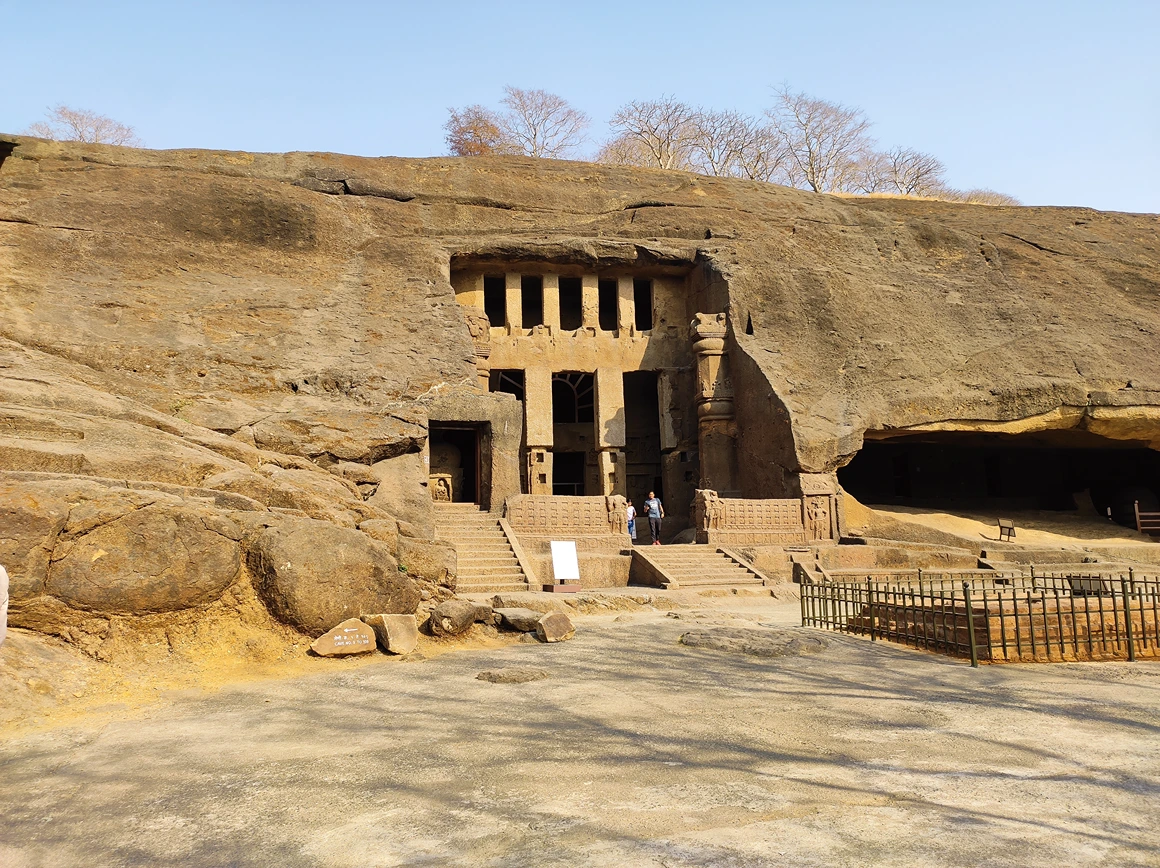
- Cave 1 – an unfinished chaitya (prayer hall) with a two-storey front.
- Cave 2 – a long hall with three stupas and carved Buddha figures.
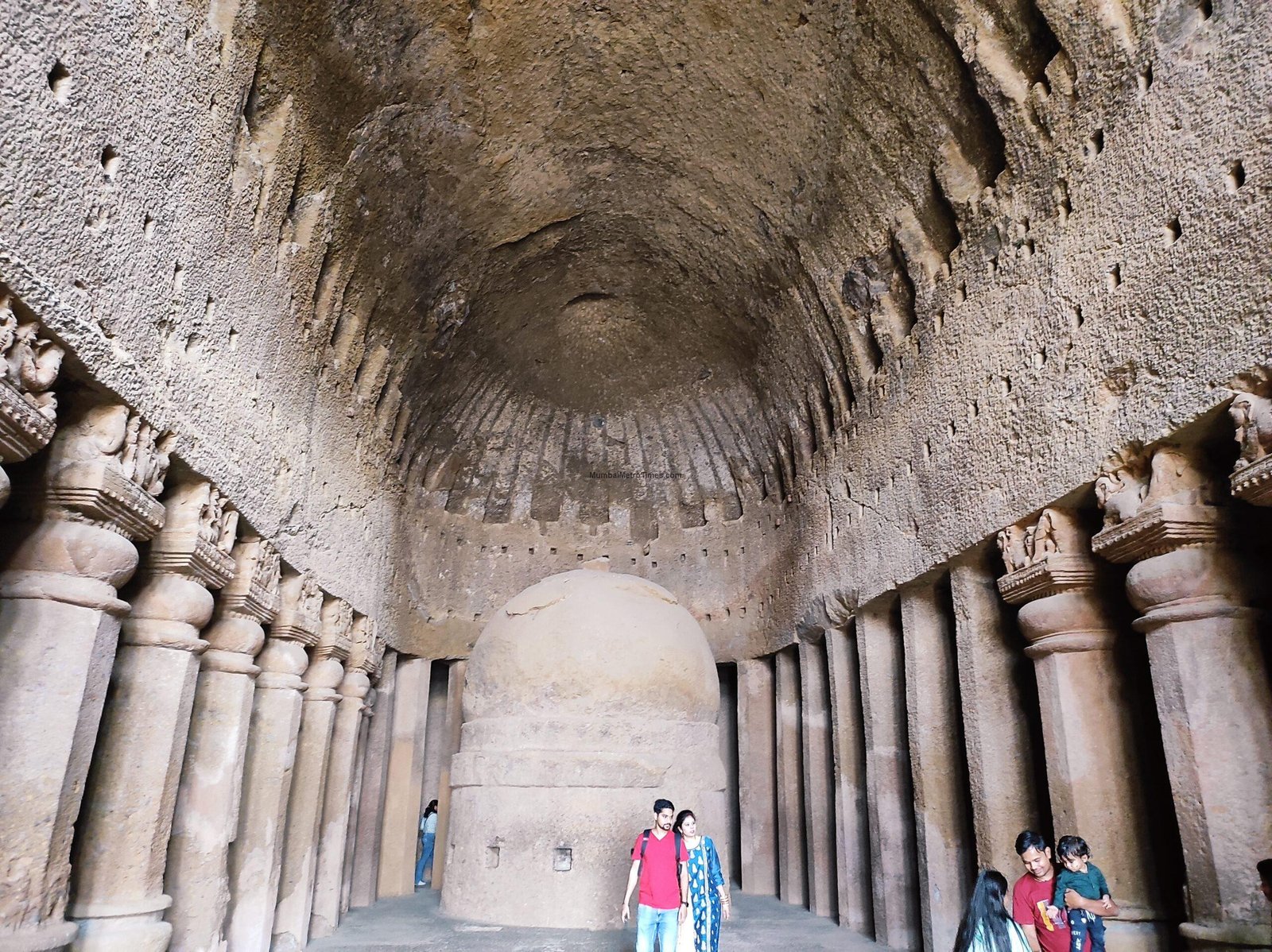
- Cave 3, the Great Chaitya – the largest hall, with a big stupa, rows of tall pillars and huge standing Buddha figures at the entrance.
- Cave 11, the Darbar hall – a large assembly hall with stone benches, where monks are believed to have met.
- Cave 41 – known for its sculptures of Avalokiteshvara.
- Upper caves and cisterns – smaller cells and water tanks higher up the hill, with views over the forest.
Interesting facts about Kanheri Caves
- There are 109 caves at Kanheri, carved over about 1,000 years.
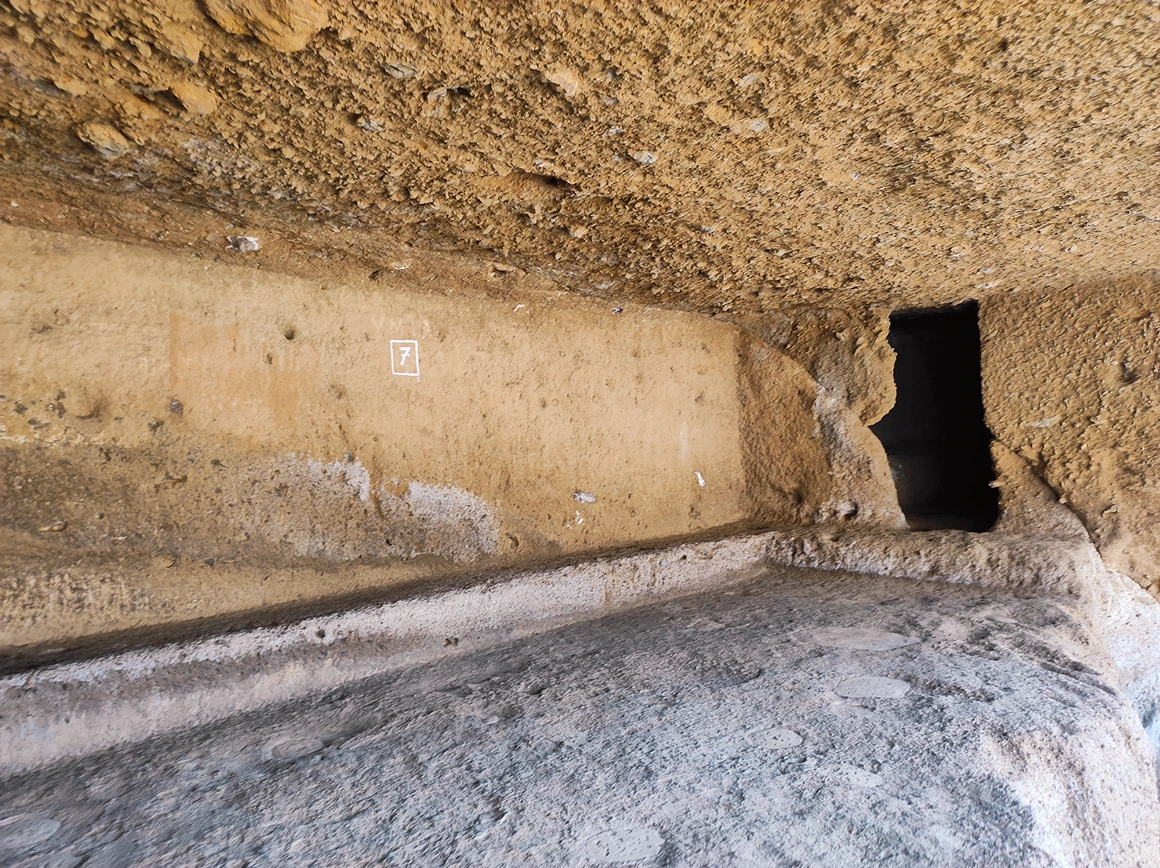
- Nearly every cave has a small platform carved entirely from stone, used as a bed.
- Several large assembly halls are supported by huge rock-cut pillars.
- The monks built a clever system of rock-cut channels and cisterns to store rainwater.
Kanheri Caves timings and tickets
| Detail | Information |
|---|---|
| Kanheri Caves timings | About 9 AM – 5 PM |
| Closed | Mondays (the national park is closed) |
| Tickets | National park entry at the main gate, plus a separate ASI ticket at the caves |
| Park bus to the caves | Separate return fare from inside the main gate |
| Time needed | 2–3 hours at the caves; half a day including travel in the park |
| Best season | October to February |
Ticket rates change from time to time, so check them at the counters. For park entry charges and timings, see our Sanjay Gandhi National Park guide.
How to reach Kanheri Caves
Kanheri Caves are inside Sanjay Gandhi National Park, so you first reach the park’s main gate in Borivali East and then travel about 7 km through the forest to the caves. Here is how to visit Kanheri Caves step by step.
- 1Take a Western line train to Borivali and walk about 1 km from the east exit, or
- 2Take Metro Line 7 to Rashtriya Udyan, next to the gate, or
- 3Take a cab, auto or BEST bus to the main gate on the Western Express Highway
Buy your park entry ticket at the main gate.
- 1Take the park bus / e-bus to Kanheri from the stop inside the main gate (separate ticket)
- 2Or rent a bicycle near the gate and ride the forest road
- 3Or walk about 7 km uphill (1.5–2 hours each way)
Buses leave when enough passengers board; check the last return time.
- 1Buy the separate ASI ticket at the cave entrance
- 2Start with Cave 3 (the Great Chaitya), then climb to the upper caves
- 3Allow 2–3 hours, and carry water and good shoes
Leave the caves in time to catch a bus back before the park closes.
By road
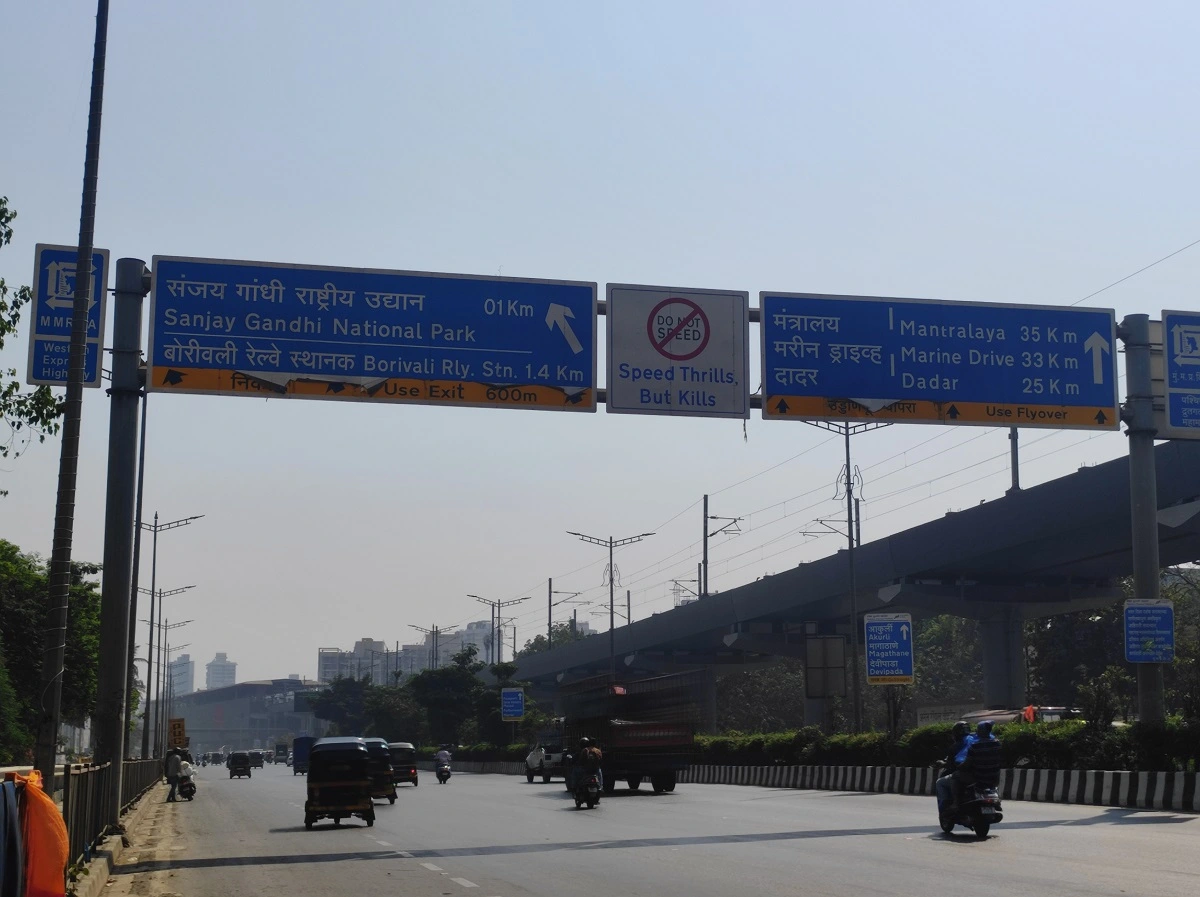
If you are travelling by car or cab, the national park is easily reached from the Western Express Highway. Drive to Borivali on the highway; the main gate is next to the National Park flyover. Paid parking is available near the gate.
By air
Mumbai airport is about 15–20 km from the national park gate. A cab takes around 45 minutes to an hour, depending on traffic. Metro Line 7 also runs north from near the airport area along the Western Express Highway to Rashtriya Udyan.
Nearest railway station to Kanheri Caves
Nearest metro station to Kanheri Caves
Kanheri Caves photos
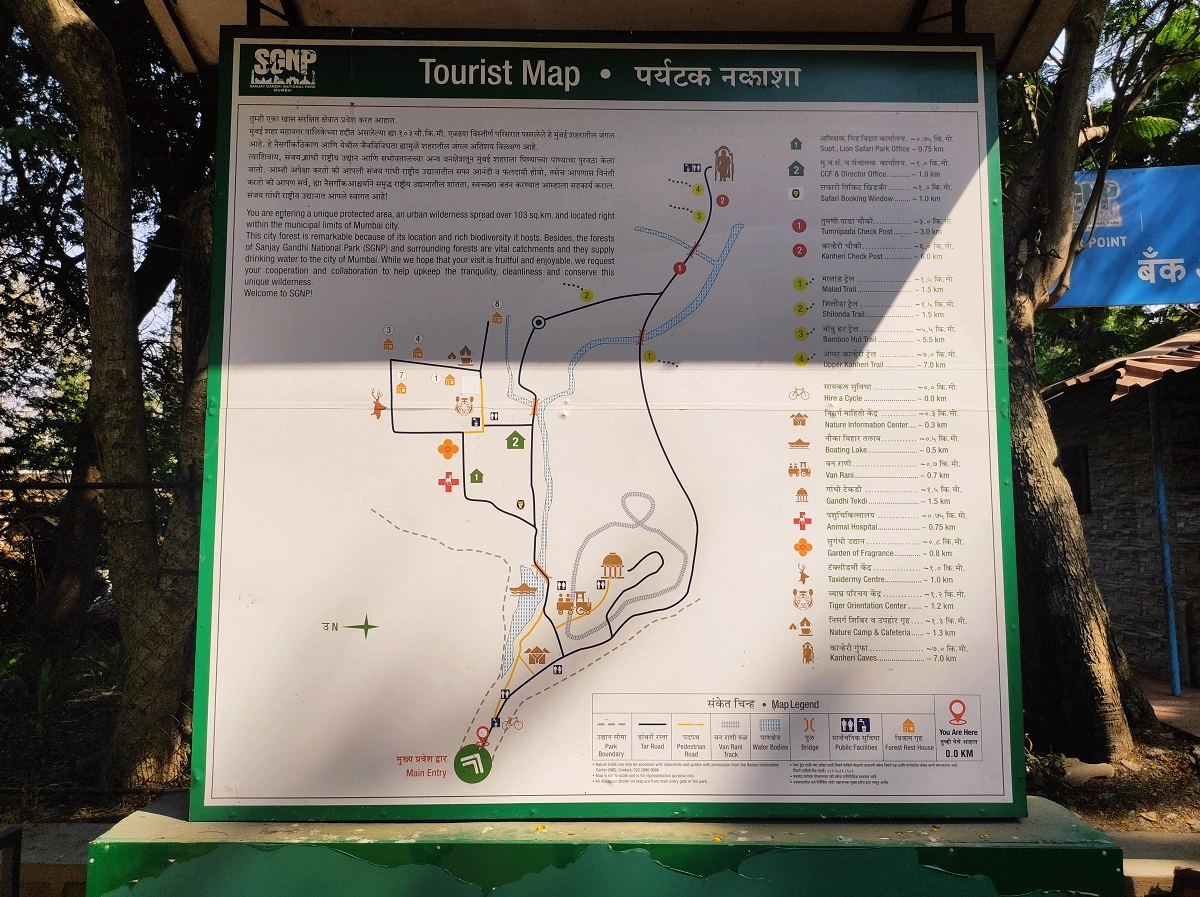
Photos taken by our team at the Kanheri Caves and Sanjay Gandhi National Park. Tap a photo to see it larger.

Things to do near Kanheri Caves
- Sanjay Gandhi National Park – the forest around the caves, with the tiger safari, the Van Rani toy train, boating, cycling and nature trails.
- Upper Kanheri trek – guided walks climb above the caves for views over the forest and lakes; check with the park’s Nature Information Centre.
- Jambhulmal peak – one of the highest points in Mumbai, in the hills near Kanheri, reached on guided treks.
- Tulsi Lake – a freshwater lake in the forest that supplies drinking water to Mumbai; it lies in a protected zone, so a forest department permission is needed to visit.
- Film City, Goregaon – Mumbai’s famous film studio complex on the edge of the national park, where many Bollywood films and TV shows are shot.
- Chhota Kashmir, Aarey – a garden with boating, a popular picnic and film-shooting spot near Film City.
Tips for visiting Kanheri Caves
- Remember that the national park and the caves are closed on Mondays.
- Arrive early; buses to the caves can have queues at weekends.
- Wear comfortable shoes; there are many rock-cut steps and uneven surfaces.
- Carry water and snacks; there are only a few stalls near the caves.
- Do not feed the monkeys, and keep food in closed bags.
- Do not touch or scratch the carvings and inscriptions.
- Check the time of the last bus back to the main gate.
If you are interested in Buddhism, ancient architecture, history or simply enjoy spending time in nature, Kanheri Caves are a must-see. Make sure to include them in your itinerary the next time you are in Mumbai.
Kanheri Caves FAQs
Where is Kanheri Caves located?
Kanheri Caves are inside Sanjay Gandhi National Park in Borivali East, Mumbai, Maharashtra, about 7 km from the park’s main gate on the Western Express Highway. The address is Kanheri Caves, Sanjay Gandhi National Park, Borivali East, Mumbai 400066.
How to reach Kanheri Caves?
Take a Western line train to Borivali (east exit) or Metro Line 7 to Rashtriya Udyan, and walk to the Sanjay Gandhi National Park main gate. From the gate, take the park bus to Kanheri, rent a cycle or walk about 7 km to the caves.
How to reach Kanheri Caves from Sanjay Gandhi National Park gate?
Park buses run from inside the main gate to the caves for a separate fare and leave when full. You can also rent a bicycle near the gate or walk the 7 km forest road, which takes about 1.5–2 hours uphill.
What are the Kanheri Caves timings?
The caves are open roughly from 9 AM to 5 PM and, like the national park, are closed on Mondays. Reach the caves by early afternoon so you have time to explore and catch a bus back.
What is the Kanheri Caves entry fee?
You pay the Sanjay Gandhi National Park entry ticket at the main gate, the park bus fare if you use it, and a separate Archaeological Survey of India ticket at the caves. Rates change from time to time, so check at the counters.
How many caves are there in Kanheri?
There are 109 caves at Kanheri, mostly viharas (monks’ living cells) along with chaityas (prayer halls), water cisterns and rock-cut steps.
How old are the Kanheri Caves?
The caves were carved over more than a thousand years, from about the 1st century BCE to the 10th century CE. The Great Chaitya, Cave 3, dates to around the 2nd century CE.
What does the name Kanheri mean?
“Kanheri” comes from the Sanskrit “Krishnagiri”, meaning “black mountain”, after the dark basalt rock into which the caves are cut.
Are Kanheri Caves the same as Elephanta Caves?
No. Kanheri is a Buddhist cave complex inside Sanjay Gandhi National Park in Borivali. Elephanta is a separate site on an island in Mumbai harbour, known for its Hindu cave temples.
What is the best time to visit Kanheri Caves?
October to February has the most pleasant weather. In the monsoon the hills are green and the old water channels flow, but steps can be slippery. Visit on a weekday morning to avoid crowds.
Exploring more of Mumbai? See Sanjay Gandhi National Park, Gateway of India, CSMT and all places to visit in Mumbai.
