

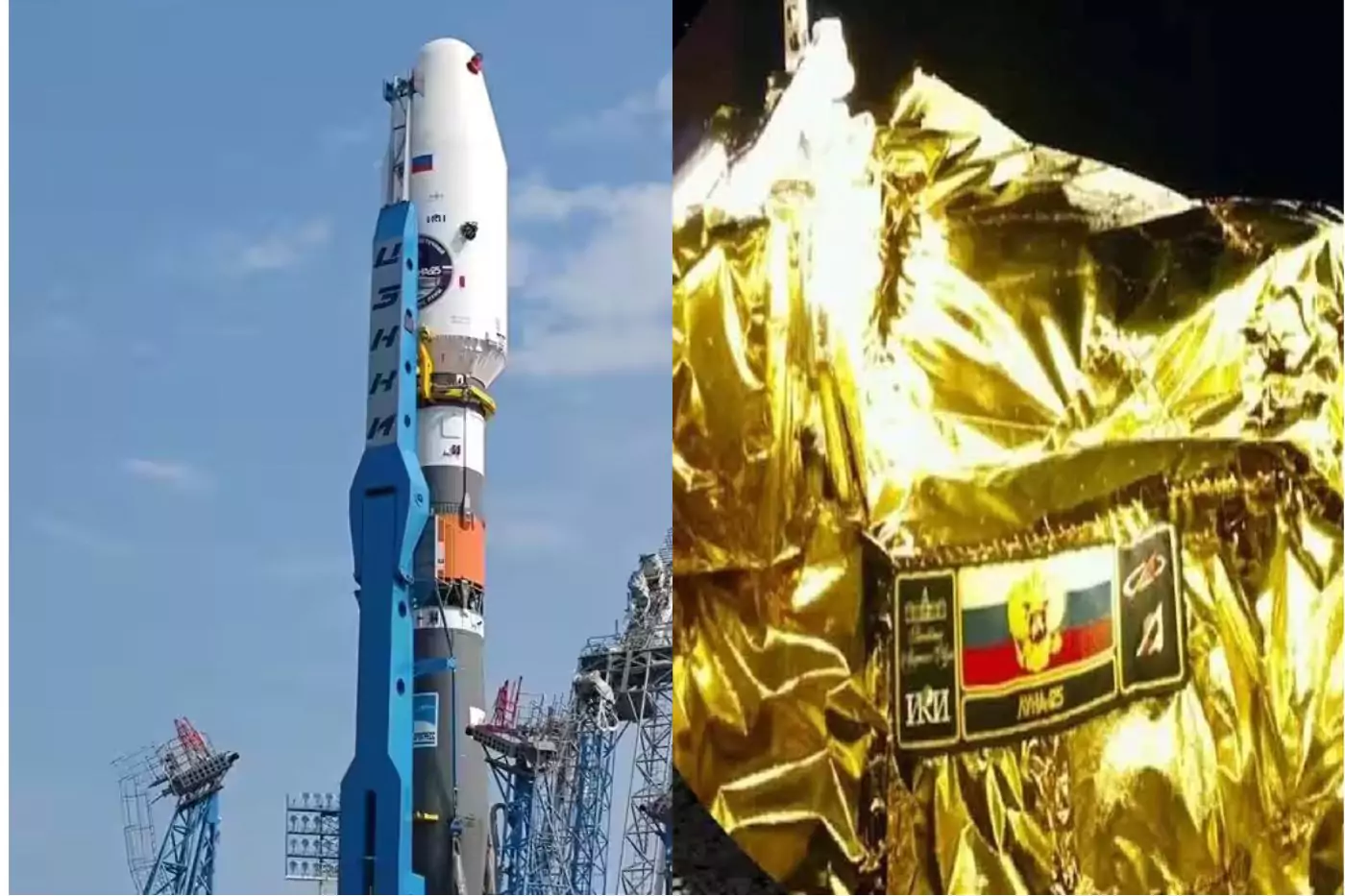
Russia’s longstanding dream of conquering the moon has hit a major setback as its Luna-25 spacecraft crashed into the lunar surface. This unfortunate incident follows a series of unsuccessful attempts to regain control of the spacecraft, which had spun out of its intended orbit. The Russian space agency, Roskosmos, confirmed this disappointing news on Sunday. Luna-25’s ill-fated journey marks Russia’s first moon mission in nearly half a century, making it a significant blow to the nation’s space aspirations.
Trouble in Orbit: Luna-25’s Unplanned Journey
In a surprising turn of events, Luna-25’s voyage took an unexpected turn. The spacecraft, which was intended to softly land on the moon, encountered difficulties in its path. Roskosmos had reported issues while attempting to position Luna-25 into a pre-landing orbit. Despite their efforts, the spacecraft’s path became unpredictable, leading to a collision with the moon’s surface. This marked the end of Luna-25’s mission.
Loss of Contact: A Sudden Disconnection
Efforts to communicate with Luna-25 during its critical moments were met with silence. The spacecraft’s connection was lost during a crucial operation, leaving mission control unable to regain control or alter its course. This loss of communication occurred on Saturday, robbing Roskosmos of any chances to rectify the situation and save the mission.
Roskosmos has pledged to investigate the causes behind the catastrophic crash. However, they have not disclosed any specific technical malfunctions that might have triggered this unfortunate outcome. As the space agency launches a thorough investigation, the world waits for insights into what went wrong during this high-stakes mission.
The failure of the Luna-25 mission serves as a stark reminder of Russia’s fading prominence in space exploration. Once a trailblazer during the Cold War era, Russia’s achievements included launching the first-ever satellite, Sputnik 1, in 1957, and sending Yuri Gagarin as the pioneer human into space in 1961. However, this recent setback underscores the nation’s diminishing influence in the modern space race.
Decades of Silence: Russia’s Lunar Drought
Luna-25’s crash brings into focus the fact that Russia had not attempted a moon mission since Luna-24 in 1976. This mission took place during the leadership of Leonid Brezhnev. The ambitious goal of Luna-25 was to achieve a soft landing on the moon’s south pole, aiming to mark a triumphant return for Russia to lunar exploration.
Race Against Time: Lunar Rivalries
Russia’s lunar ambitions faced fierce competition from other global players. India’s Chandrayaan-3 spacecraft is scheduled to attempt a soft landing on the moon’s south pole just days after Luna-25’s unfortunate end. This race to reach the moon’s surface mirrors broader efforts by countries like China and the United States, both of which have their own ambitious lunar plans.
As Russia’s Luna-25 mission ends in disappointment, the world watches closely to see how the investigation unfolds and whether Russia can reclaim its position as a major player in space exploration. Meanwhile, India’s Chandrayaan-3 and other nations’ lunar aspirations continue to push the boundaries of human knowledge and ambition.