

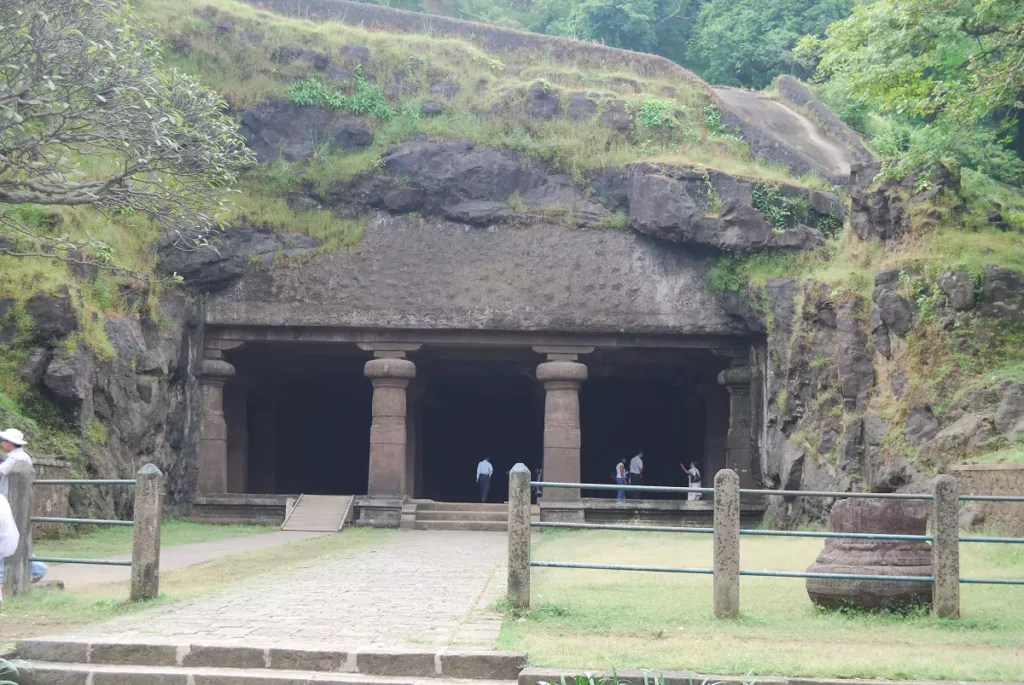
- What it isRock-cut cave temples to Lord Shiva, 6th–7th century CE · UNESCO World Heritage Site
- FerryFrom the Gateway of India · about 1 hour each way · roughly ₹250–300 return
- Ferry timingsFirst boat about 9 AM, last boat out about 2 PM, last boat back about 5:30 PM
- Nearest metro (to the jetty)Hutatma Chowk ~1.5 km to the GatewayLine 3 · Aqua
- On the islandToy train from the jetty, then about 120 steps up to the caves
- Best timeNovember – February · first ferry of the day
- LocationGharapuri (Elephanta Island), about 11 km north-east of the Gateway of India, Raigad district
Elephanta Caves are a group of rock-cut cave temples on Elephanta Island, also called Gharapuri, in Mumbai harbour. Carved around the 6th and 7th centuries CE and dedicated mainly to Lord Shiva, they hold some of the finest stone sculpture in India, including the famous three-faced Sadashiva. The caves are a UNESCO World Heritage Site and a one-hour ferry ride from the Gateway of India. This guide covers their history and architecture, what to see inside, cave timings and tickets, ferry timings and fares, how to reach, and tips for a smooth day trip.
About Elephanta Caves
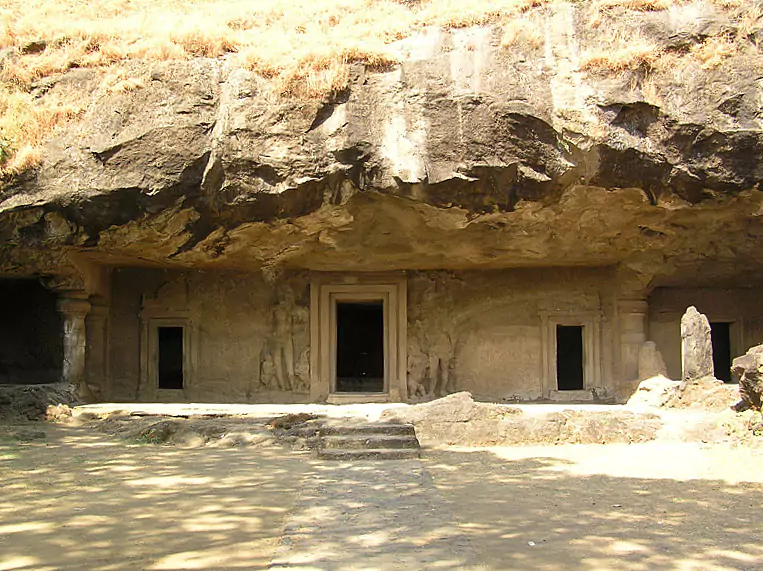
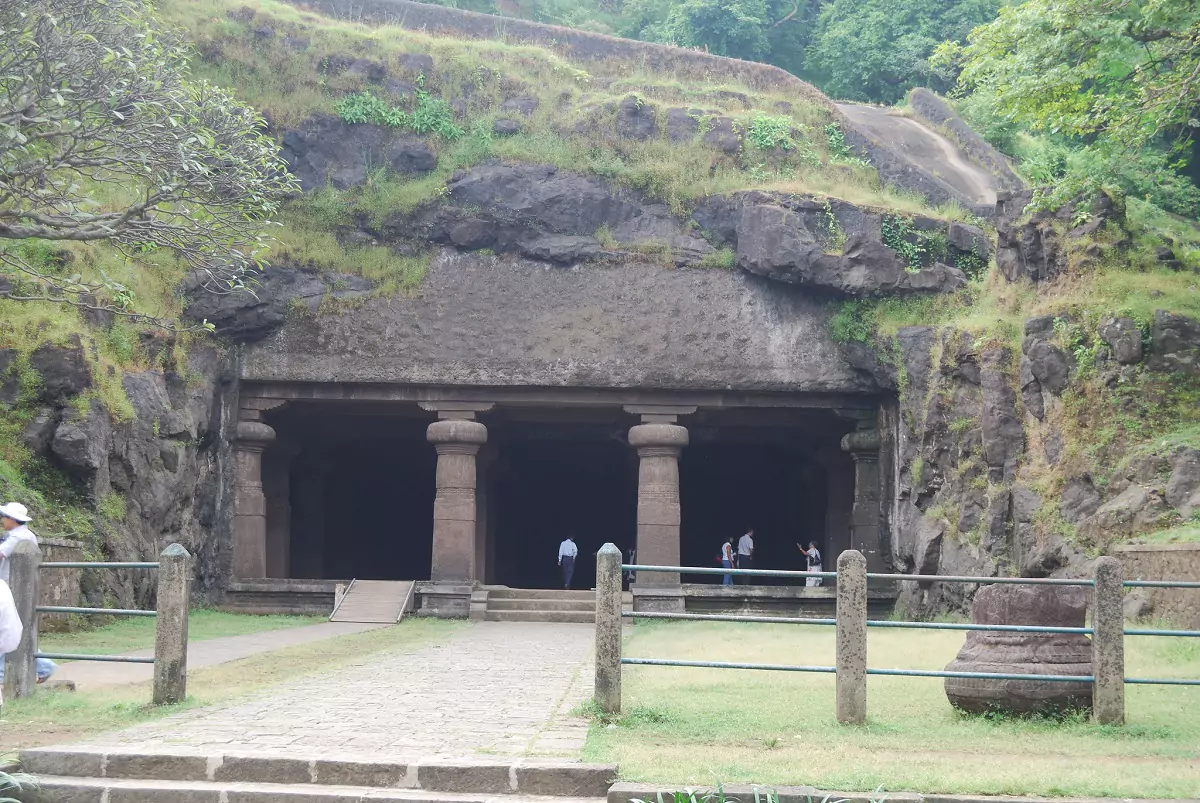
There are seven caves on the island, cut into two hills. Five Hindu caves lie on the western hill, led by the Great Cave (Cave 1), a vast pillared hall carved out of a single mass of basalt. Two smaller caves and the remains of Buddhist stupas lie on the eastern hill, showing that monks lived here long before the Shiva temples were made.
The island’s old name is Gharapuri, “the city of caves”, and it is still the name of the small village on the island. The Portuguese, who took control of the island in the 16th century, called it Elephanta after a huge stone elephant they found near the landing place. That elephant, broken and later reassembled, now stands in Jijamata Udyan, the city zoo garden at Byculla.
UNESCO added the Elephanta Caves to its World Heritage list in 1987, and the Archaeological Survey of India (ASI) protects and manages them.
Where are Elephanta Caves?
Elephanta Island lies in the harbour east of south Mumbai, about 11 km north-east of the Gateway of India and about 7 km from the mainland shore near Uran. Although most visitors come from Mumbai, the island falls in Uran taluka of Raigad district. There is no bridge or road, so the only way to get there is by boat.
| Elephanta Caves location | |
|---|---|
| Island | Elephanta Island (Gharapuri), Mumbai harbour |
| District | Uran taluka, Raigad district, Maharashtra |
| Distance | About 11 km by sea from the Gateway of India |
| Main ferry point | Gateway of India jetty, Apollo Bunder, Colaba |
| Nearest metro to the jetty | Hutatma Chowk, Mumbai Metro Line 3, about 1.5 km from the Gateway |
| Managed by | Archaeological Survey of India (ASI) |
Elephanta Caves history
Nobody knows for certain who carved the Elephanta Caves; no inscription records it. Coins and pottery found on the island show that people lived here from early times, and Buddhist stupa remains point to a monastery on the eastern hill. Most historians date the great Shiva caves to the 6th century CE and link them to the Kalachuri kings, though some credit the Konkan Mauryas, who ruled this coast at the time. An inscription of the Chalukya king Pulakeshin II at Aihole mentions the capture of a harbour city called Puri, which many scholars identify with this island.
- Early centuries CEBuddhist settlement
Monks build stupas on the eastern hill; the island sits on busy sea routes along the Konkan coast.
- 6th – 7th c.The Shiva caves
The Great Cave and the other Hindu caves are carved, most likely under the Kalachuri or Konkan Maurya rulers.
- 7th – 13th c.Changing rulers
The island passes through the hands of the Chalukyas, Rashtrakutas, Silaharas and Yadavas.
- 16th c.The Portuguese
The Portuguese take the island and name it Elephanta after its stone elephant. Many sculptures are damaged in the following centuries.
- 18th – 19th c.British rule
The island passes to the Marathas and then the British; the broken elephant is later moved to Mumbai.
- 1987World Heritage Site
UNESCO lists the Elephanta Caves as a World Heritage Site.
- 2018Power at last
An undersea cable brings regular electricity to the island’s villages for the first time.
Architecture of Elephanta Caves
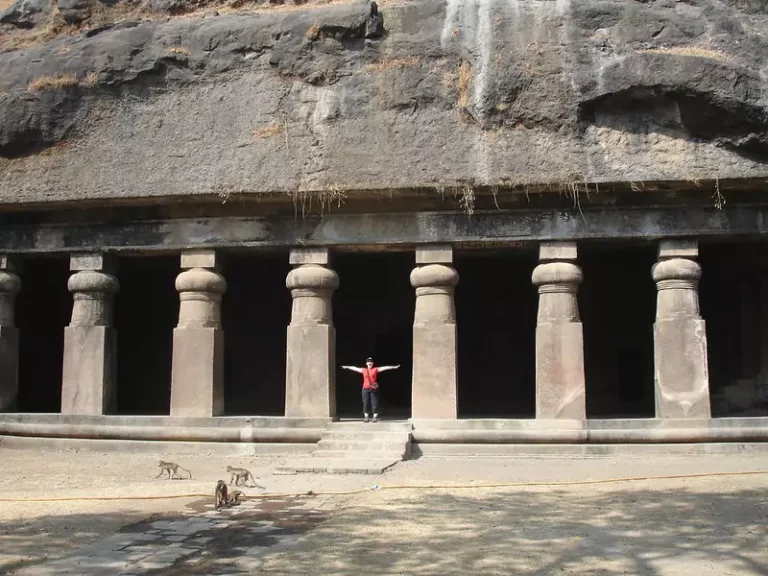
The Great Cave is one of the finest examples of rock-cut temple architecture in India. Instead of being built from blocks, the whole temple was cut downward and inward into the hill, leaving pillars, walls and sculptures standing in the living rock. Its plan is similar to the Dumar Lena cave at Ellora.
- Three entrances – the main entrance faces north, with two side openings on the east and west that let in light and air.
- Pillared hall – the central hall has six rows of six massive pillars with cushion-shaped capitals, though several have broken over time.
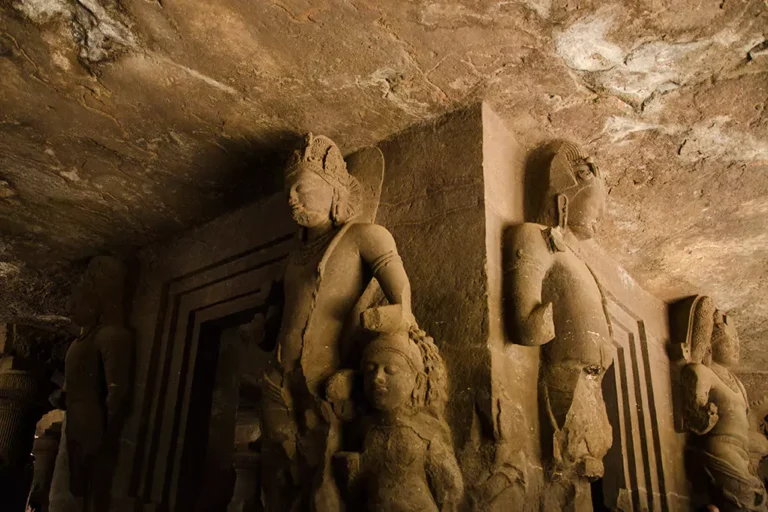
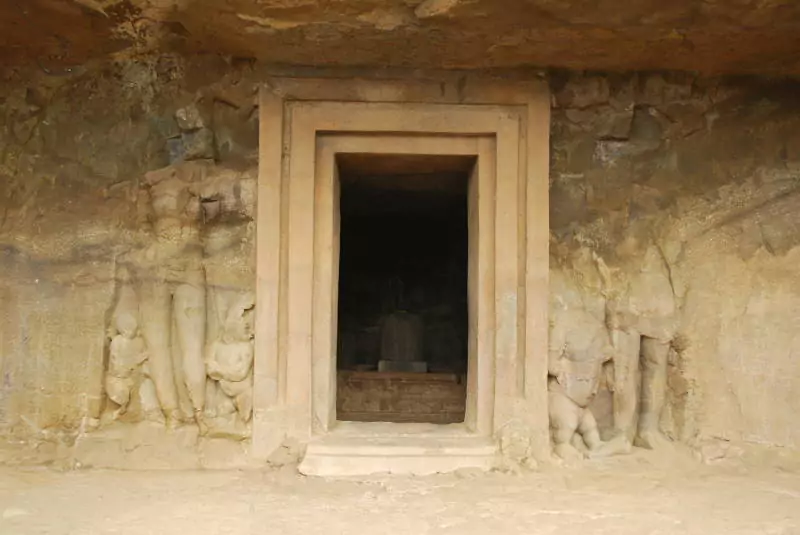
- Linga shrine – a square sanctum with a door on each side holds a Shiva linga. Tall guardian figures (dvarapalas) stand at the doors.
- Sculpted panels – large relief panels line the walls, each telling a story from Shiva’s life.
- Side courtyards – courtyards to the east and west hold smaller shrines and more carvings.
What to see at Elephanta Caves
Sadashiva (the Trimurti)
Facing the main entrance, on the south wall, is the most famous sculpture at Elephanta: a giant bust of Shiva with three faces, rising almost to the ceiling. Often called the Trimurti, it is more correctly known as Sadashiva or Maheshamurti. One face is calm and meditative, one is fierce, with a moustache and snakes, and one is gentle and graceful. Together they show Shiva as creator, protector and destroyer.
Other panels in the Great Cave
- Ardhanarishvara – Shiva as half man and half woman, showing that Shiva and Parvati are one.
- Gangadhara – Shiva catching the river Ganga in his hair as she falls from the sky.
- Kalyanasundara – the wedding of Shiva and Parvati.
- Ravananugraha – Ravana trying to lift Mount Kailasa while Shiva holds it down with one toe.
- Nataraja – Shiva as the lord of dance.
- Andhakasuravadha – Shiva killing the demon Andhaka.
- Yogishvara (Lakulisha) – Shiva seated in meditation on a lotus.
- Shiva and Parvati playing chausar – a gentle scene of the couple playing a board game on Kailasa.
The other caves and Cannon Hill
Caves 2 to 5 are smaller and partly unfinished, and some have been restored. On the eastern hill are two more caves and a mound of Buddhist stupa remains. A path leads up to Cannon Hill, where two large British-era guns still stand, with wide views over the harbour. Near the ticket counter, a small site museum explains the history of the island and the caves.
Elephanta Caves timings and tickets
| Detail | Information |
|---|---|
| Cave timings | 9 AM – 5 PM, Tuesday to Sunday |
| Closed | Mondays |
| Cave ticket (Indians, SAARC and BIMSTEC citizens) | ₹40 at the counter · ₹35 online |
| Cave ticket (other foreign visitors) | ₹600 at the counter · ₹550 online |
| Children under 15 | Free |
| Ferry from the Gateway (return) | About ₹250–300, bought separately at the jetty |
| Toy train on the island | About ₹10 per person each way |
| Time needed | 5–6 hours for the whole trip from the Gateway |
Cave ticket rates are from the Archaeological Survey of India, checked in November 2026. Ferry and toy train fares are set by the operators and change from time to time, so check the boards at the counters.
Best time to visit
November to February is the best time to visit, with cooler weather and calm seas. Take the first ferry at about 9 AM to explore before the crowds and the midday heat. In the monsoon, from about June to September, the island is green and beautiful, but ferries may be cancelled when the sea is rough. Avoid Mondays, when the caves are closed.
Elephanta ferry timings and fares
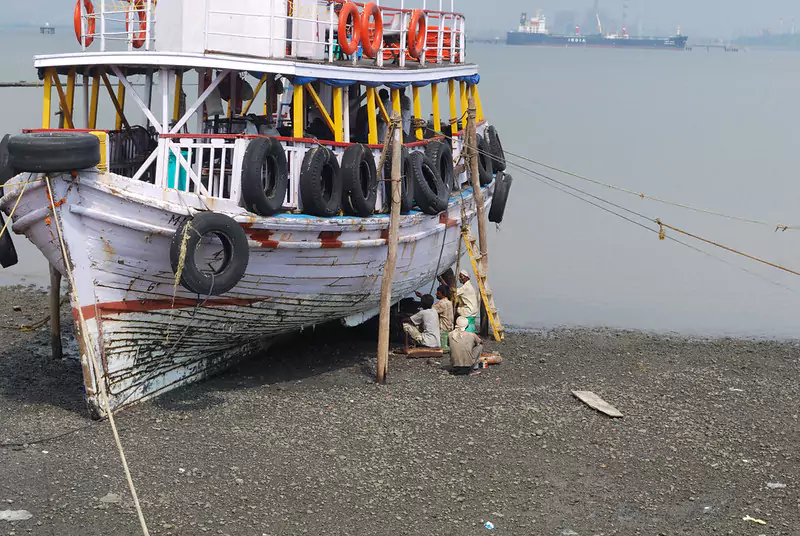
Ferries to Elephanta leave from the jetties beside the Gateway of India. Ticket counters are on the promenade next to the jetties; buy only from the official counters, carry cash, and keep your ticket, as it is also your return ticket.
| Ferry detail | Information |
|---|---|
| First ferry from the Gateway | About 9 AM |
| Frequency | About every 30 minutes, or when the boat is full |
| Last ferry from the Gateway | About 2 PM |
| Last ferry back from Elephanta | About 5:30 PM |
| Journey time | About 1 hour each way |
| Fare (return) | About ₹250–300 for an ordinary launch; more for the upper deck |
Life jackets have been compulsory on all boats from the Gateway since a deadly ferry accident near the island in December 2024. Wear yours for the whole trip, and do not crowd one side of the boat. Some operators also run catamarans and speedboats to Elephanta from the CBD Belapur jetty in Navi Mumbai, mainly on weekends; they are quicker but cost more.
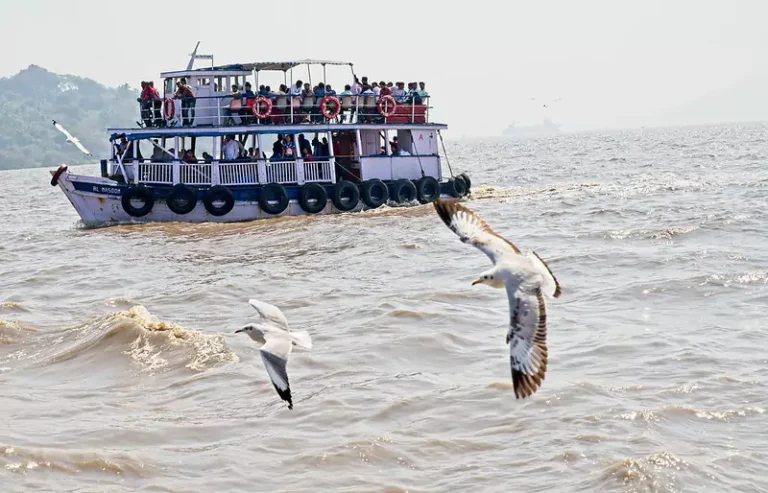
How to reach Elephanta Caves
Getting to the caves takes three steps: reach the Gateway of India, cross the harbour by ferry, and then climb up to the caves on the island.
- 1Take Mumbai Metro Line 3 to Hutatma Chowk and walk about 1.5 km, or
- 2Take a local train to CSMT or Churchgate and a taxi (about 2 km), or
- 3Take a BEST bus or taxi to the Gateway of India, Colaba
Reach the jetty by 9 AM for the first ferry.
- 1Buy a return ferry ticket at the counters beside the Gateway
- 2Board the ferry and wear your life jacket
- 3Reach the Elephanta jetty in about 1 hour
Note the time of the last boat back, about 5:30 PM.
- 1Take the toy train along the jetty, or walk about 10 minutes
- 2Climb about 120 steps lined with stalls to the hilltop
- 3Buy the ASI ticket at the counter and start with the Great Cave
Doli (chair) carriers are usually available at the foot of the steps for those who cannot climb.
From the airport
From Mumbai airport, take Metro Line 3 from the CSMIA T1 or T2 station to Hutatma Chowk, then walk or take a taxi to the Gateway. Leave early, as the last ferry to the island leaves at about 2 PM.
Nearest metro station to the Elephanta ferry
Nearest railway station to the Elephanta ferry
Elephanta Caves photos
Tap a photo to see it larger.




Places to visit near the Elephanta ferry
- Gateway of India – the 1924 arch beside the ferry jetty, best seen in the morning before you board.
- Taj Mahal Palace – the landmark 1903 hotel facing the Gateway, worth a look from outside.
- Colaba Causeway – a busy street market for clothes, jewellery and souvenirs, a few minutes’ walk away.
- Chhatrapati Shivaji Maharaj Vastu Sangrahalaya – Mumbai’s main museum at Kala Ghoda, with fine Indian sculpture.
- Kala Ghoda – the art district with galleries, cafés and heritage buildings.
- Jijamata Udyan, Byculla – the city zoo garden, where the original stone elephant of Elephanta now stands.
Tips for visiting Elephanta Caves
- Do not go on a Monday. The caves are closed, and most tourist ferries do not run.
- Start early. Take the first ferry at about 9 AM; by noon the island is hot and crowded.
- Carry cash for the ferry and toy train, and keep your ferry ticket for the return.
- Watch the time. The last ferry back leaves at about 5:30 PM; there is nowhere to stay on the island.
- Mind the monkeys. Keep food and water bottles inside your bag.
- Wear good shoes and carry water, a cap and sunscreen; the steps and paths are uneven.
- Hire a guide at the caves, or read the ASI boards, to understand the panels; the stories make the carvings come alive.
- Check the weather in the monsoon, when ferries can be cancelled at short notice.
With an early start, Elephanta makes an easy and rewarding half-day trip from south Mumbai: a harbour ride, a short climb, and some of the most remarkable sculpture in India.
Elephanta Caves FAQs
Where are the Elephanta Caves?
The Elephanta Caves are on Elephanta Island, also called Gharapuri, in Mumbai harbour, about 11 km north-east of the Gateway of India. The island is in Uran taluka of Raigad district, Maharashtra.
How to reach Elephanta Caves from Mumbai?
Take a ferry from the jetty beside the Gateway of India. The ride takes about 1 hour. On the island, take the toy train or walk along the jetty, then climb about 120 steps to the caves.
What are the Elephanta Caves timings?
The caves are open from 9 AM to 5 PM, Tuesday to Sunday, and are closed on Mondays. Ferries from the Gateway run from about 9 AM to 2 PM, and the last ferry back leaves the island at about 5:30 PM.
What is the Elephanta Caves entry fee?
The ASI ticket is ₹40 for Indian, SAARC and BIMSTEC citizens (₹35 online) and ₹600 for other foreign visitors (₹550 online). Children under 15 enter free. The ferry fare is separate.
What is the Elephanta ferry fare?
A return ticket on an ordinary ferry from the Gateway of India costs about ₹250–300, with the upper deck costing a little more. Fares are set by the operators and change from time to time.
Are Elephanta Caves open on Monday?
No. The Elephanta Caves are closed every Monday, and most tourist ferries from the Gateway of India do not run that day.
Who built the Elephanta Caves?
No inscription names the builders. Most historians date the main caves to the 6th century CE and link them to the Kalachuri kings, while some credit the Konkan Mauryas.
Why is it called Elephanta?
The Portuguese named the island Elephanta after a large stone elephant they found near the landing place. The local name is Gharapuri. The elephant now stands in Jijamata Udyan, Byculla.
How many caves are there at Elephanta?
There are seven caves: five Hindu caves on the western hill, led by the Great Cave, and two caves with Buddhist stupa remains on the eastern hill.
How much time is needed for Elephanta Caves?
Plan for 5 to 6 hours from the Gateway of India, including about 2 hours on the ferry and 2 to 3 hours on the island.
Exploring more of Mumbai? See Gateway of India, Kanheri Caves, CSMT and all places to visit in Mumbai.